
The Blog
Written for people who run the line.
Product updates, company news, engineering deep-dives, and what we learn from the controls engineers who run real lines.
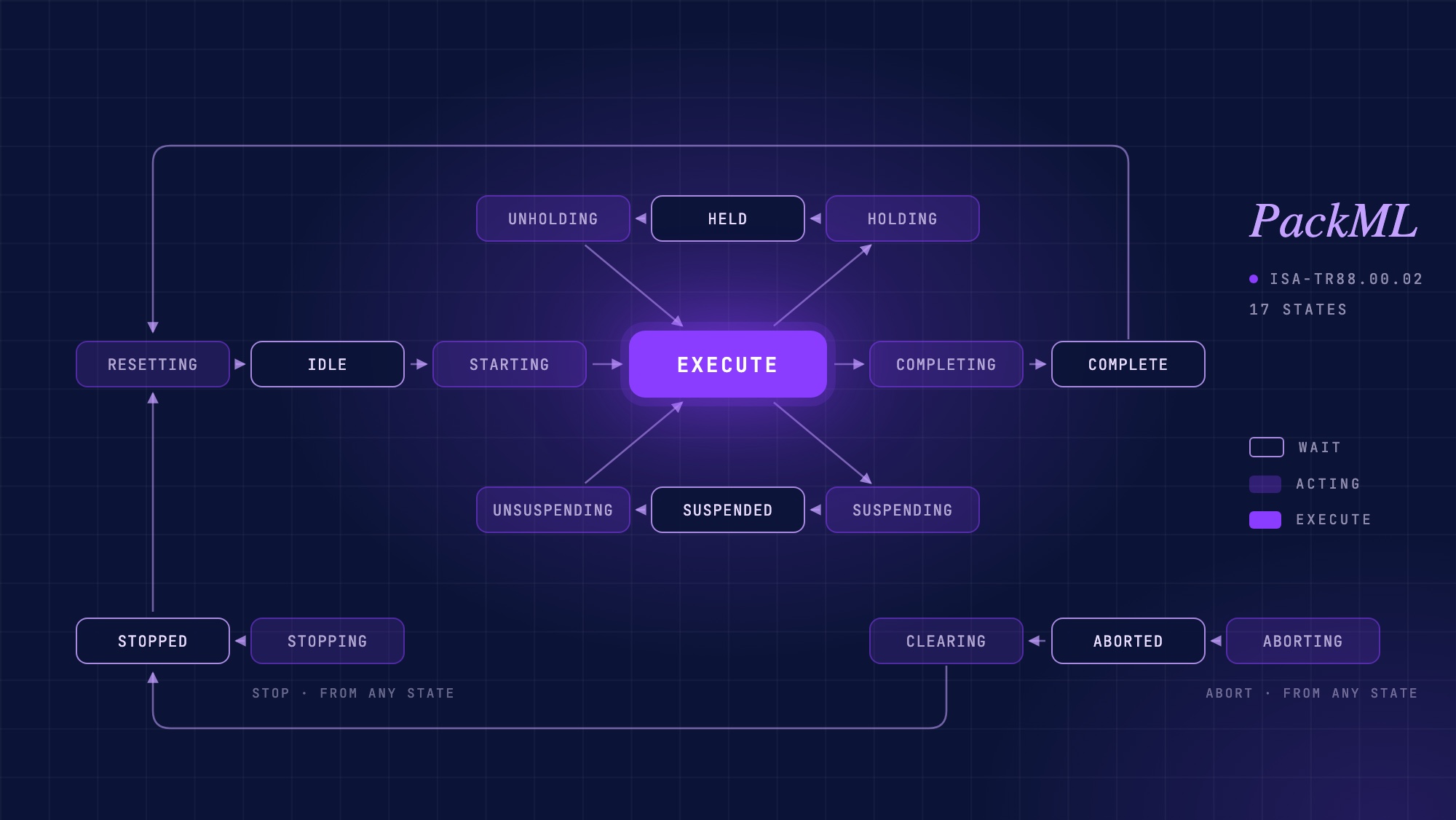
PackML explained: the state model, PackTags, and where AI fits
What PackML is, how the 17-state machine, modes and PackTags work, how to check whether a PLC project really follows it, and where AI helps.
Read the post →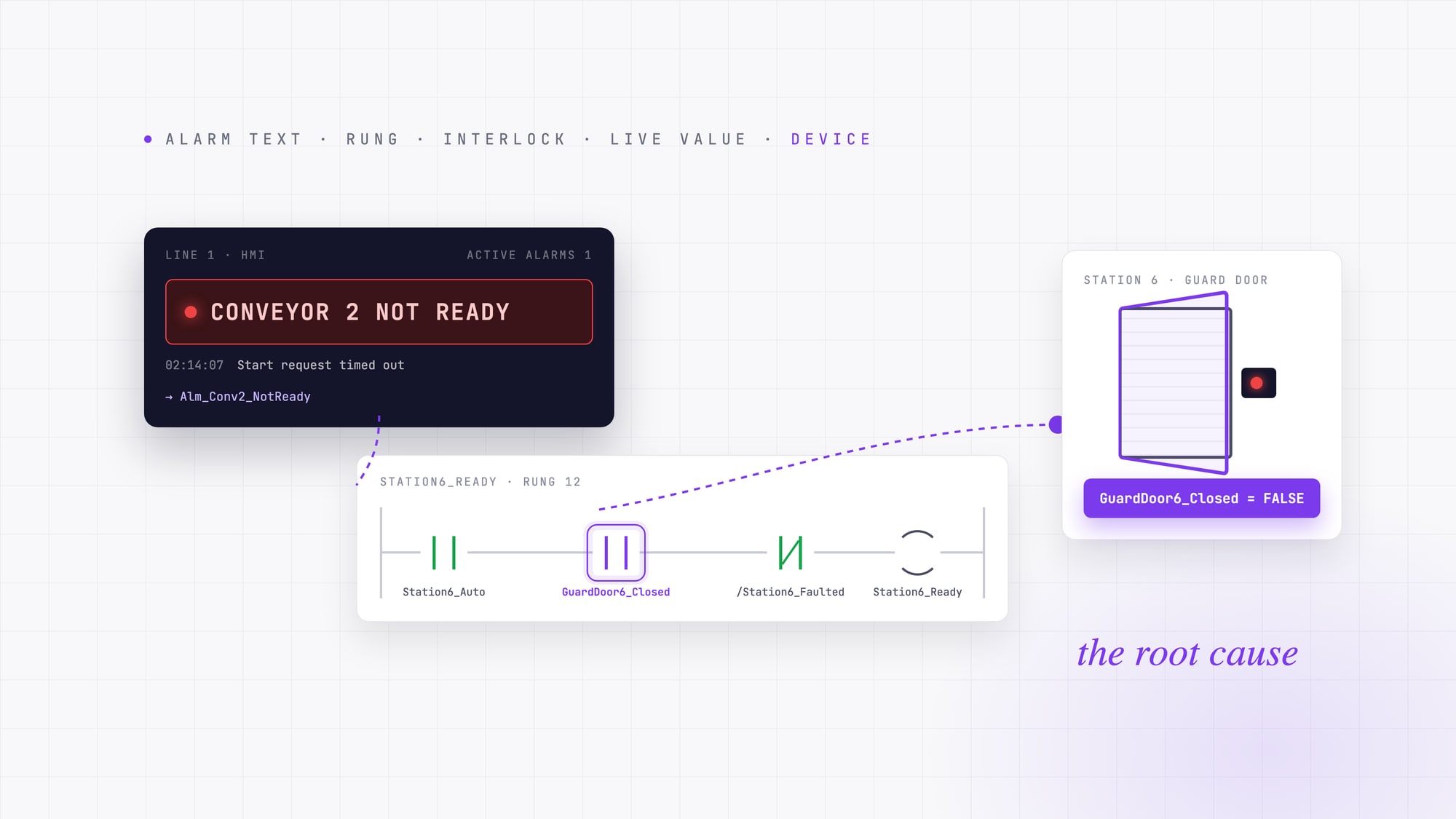
PLC fault codes and HMI alarms: how to trace an alarm back to its root cause
A PLC fault code or HMI alarm tells you where troubleshooting starts, not why the machine stopped. A field method for tracing an alarm from its text to the device behind it.
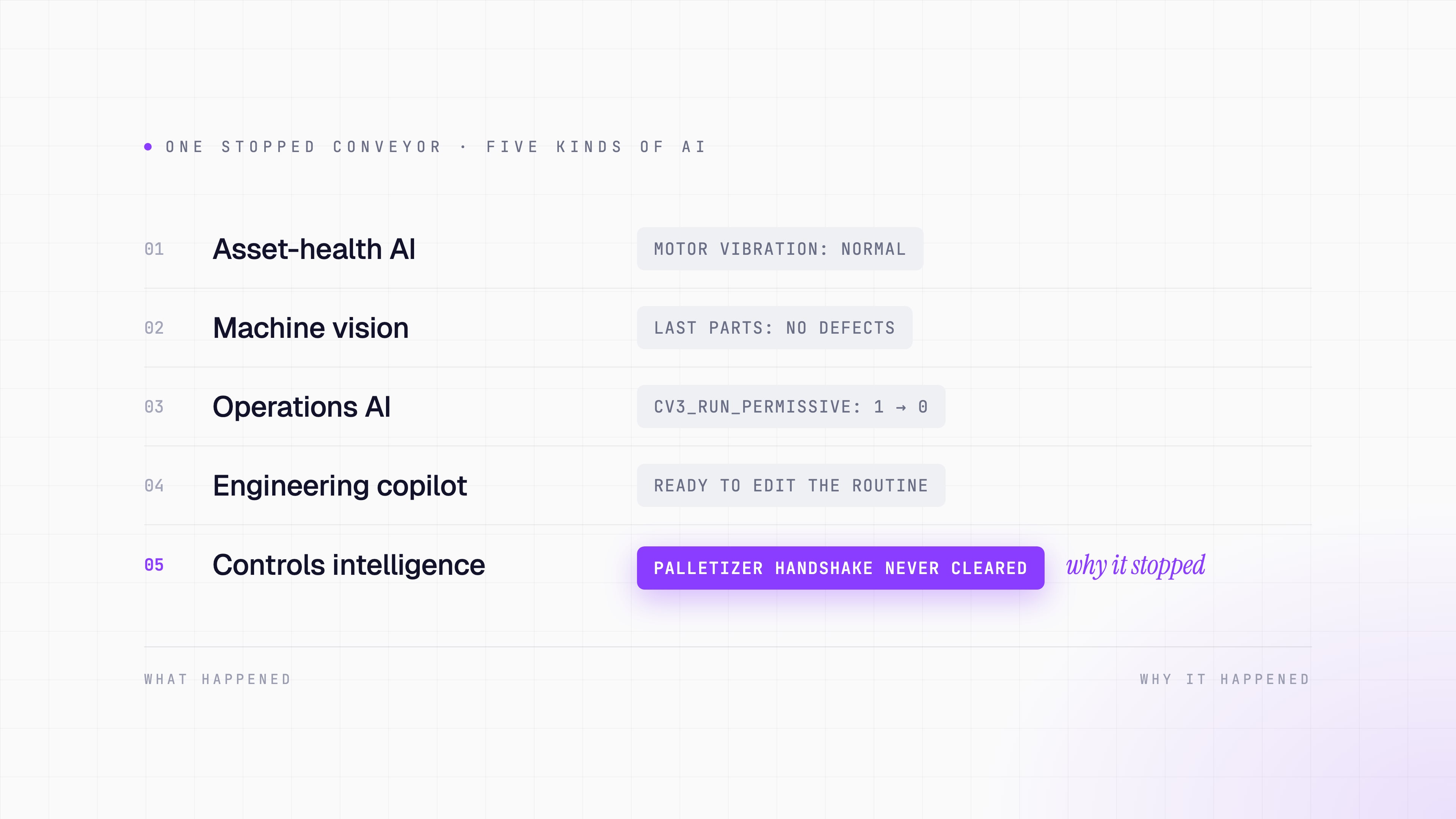
What is the best AI for industrial automation in 2026?
There is no single best AI for industrial automation. Compare industrial AI by the problem it solves, from machine vision to PLC troubleshooting.
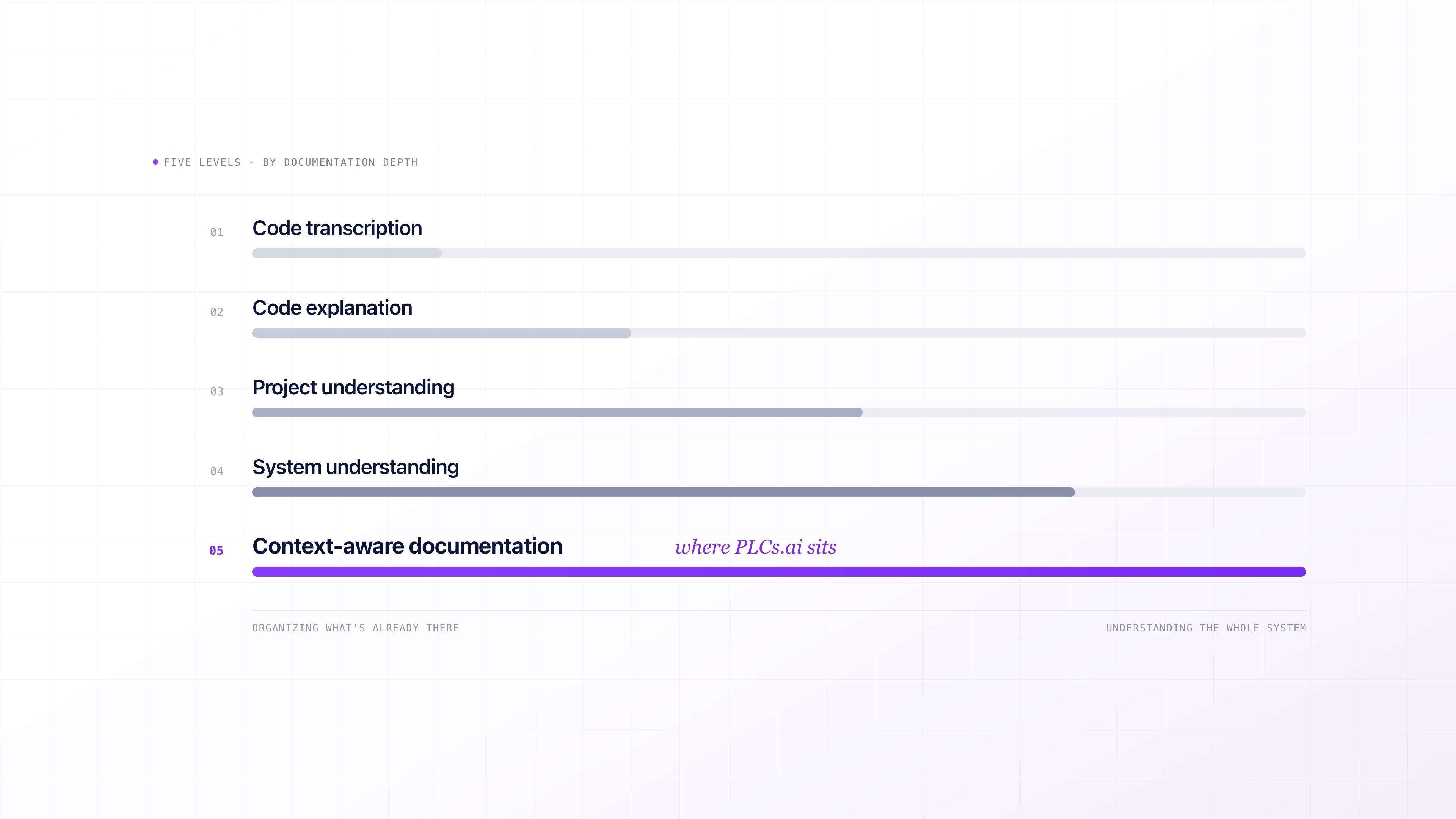
PLC documentation software: 9 tools compared (2026).
Automatic PLC documentation ranges from deterministic tools that reformat what is already in the project, to AI that infers meaning from undocumented code, to platforms that generate documentation from a broader understanding of the automation system. Nine real tools, compared on what they actually do.
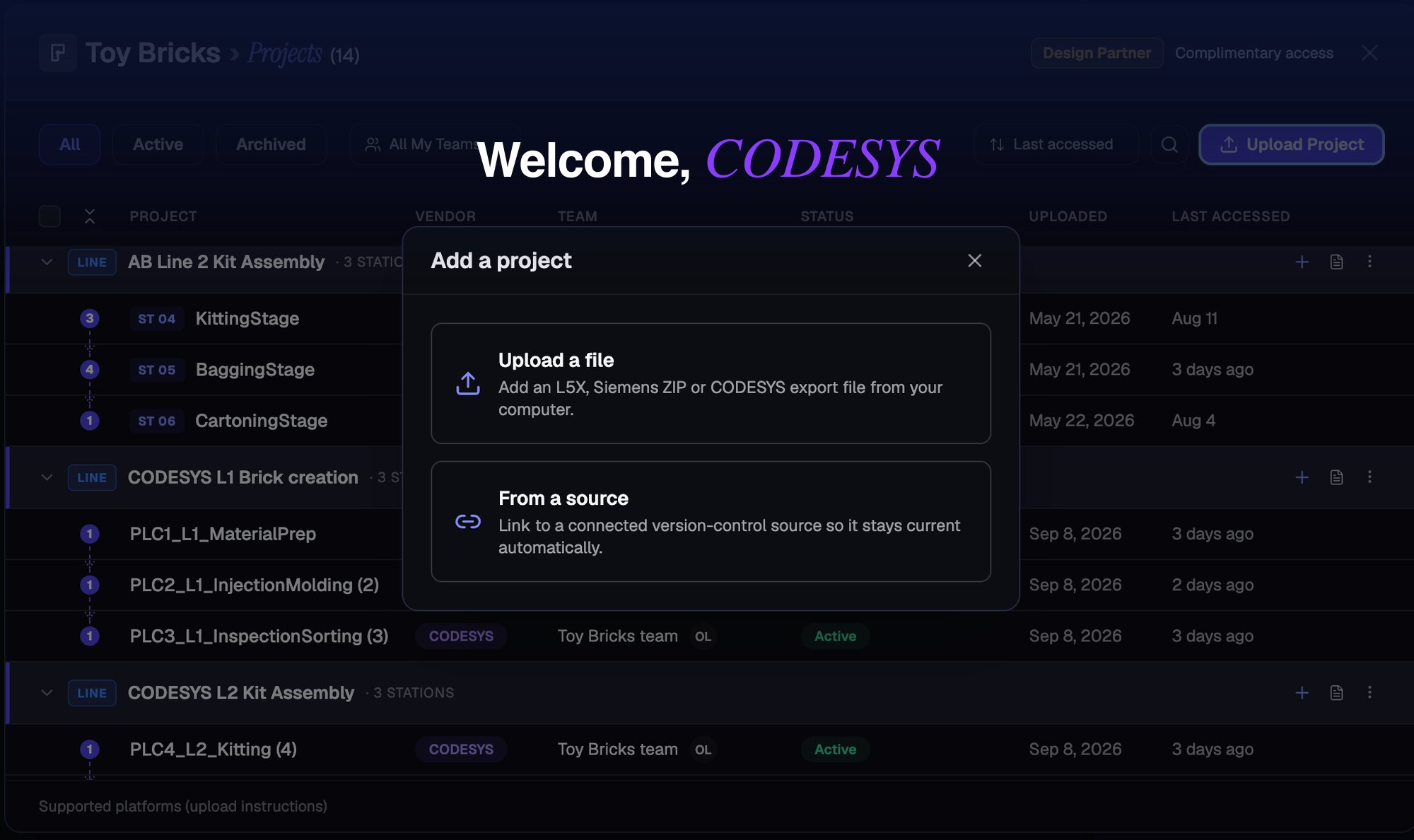
PLCs.ai now supports CODESYS V3 projects, across the entire CODESYS ecosystem.
PLCs.ai now supports CODESYS V3 projects, across first-party CODESYS environments and OEM platforms like WAGO, ABB, and Bosch Rexroth. A CODESYS export has no tag table and no hardware/IO tree, so getting there took real re-engineering, not just a new parser.
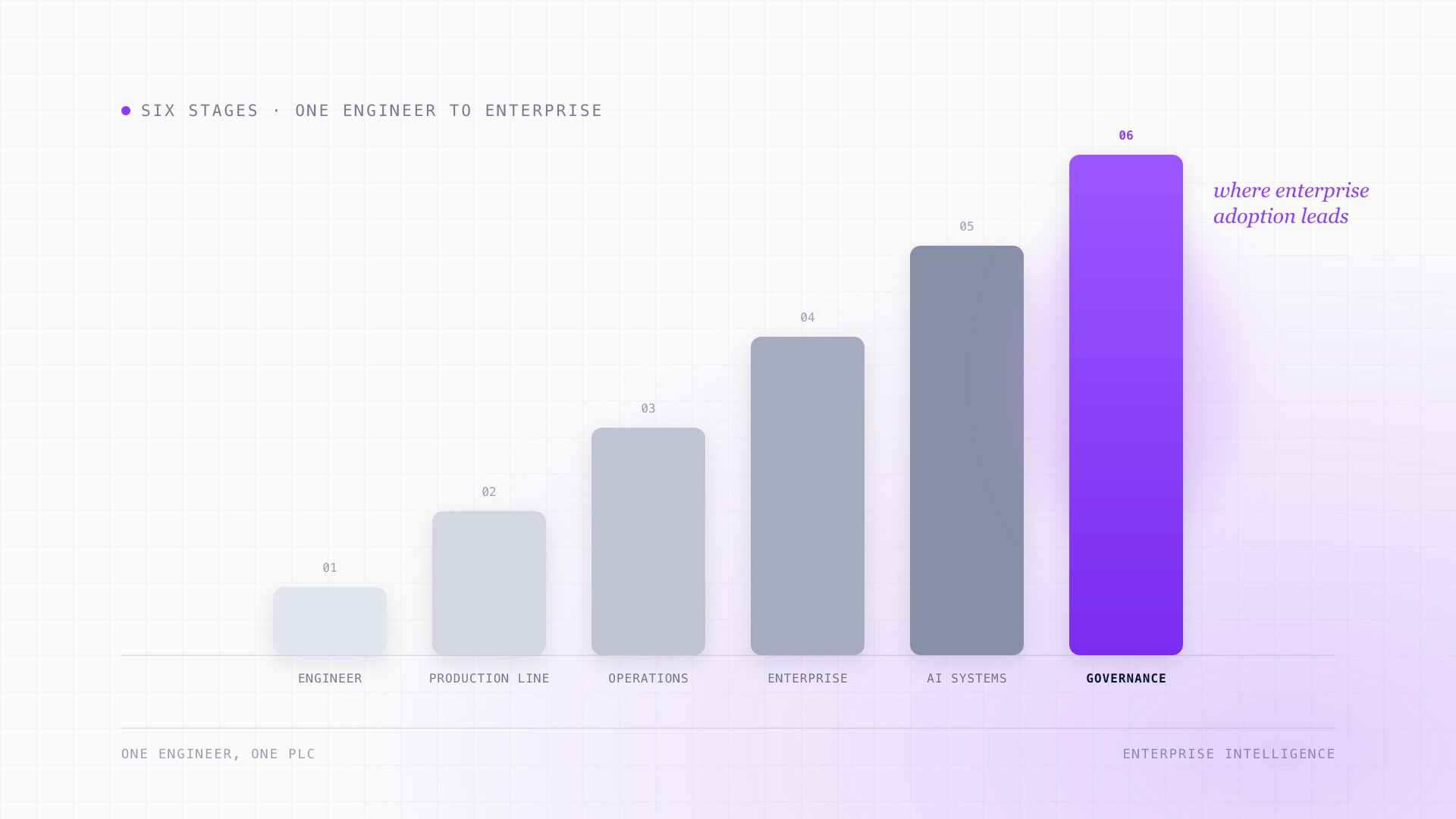
The manufacturing AI adoption journey: from individual tools to enterprise intelligence.
AI adoption in manufacturing almost never starts as a transformation. It starts with one engineer, one PLC, and one AI model. What changes at each stage after that, from helping a maintenance tech at 2 AM to governing access across an entire enterprise, and why the infrastructure needed at the end looks nothing like where most manufacturers start.

Why industrial AI must understand the entire production line, not just one PLC.
Production lines are rarely single-vendor. A stopped machine on an Allen-Bradley PLC can be waiting on a permissive that only makes sense once you look at the Siemens PLC next to it. What mixed-vendor line context means, why it is different from simply supporting multiple PLC vendors, and how AI can trace a fault across both sides of that handshake.
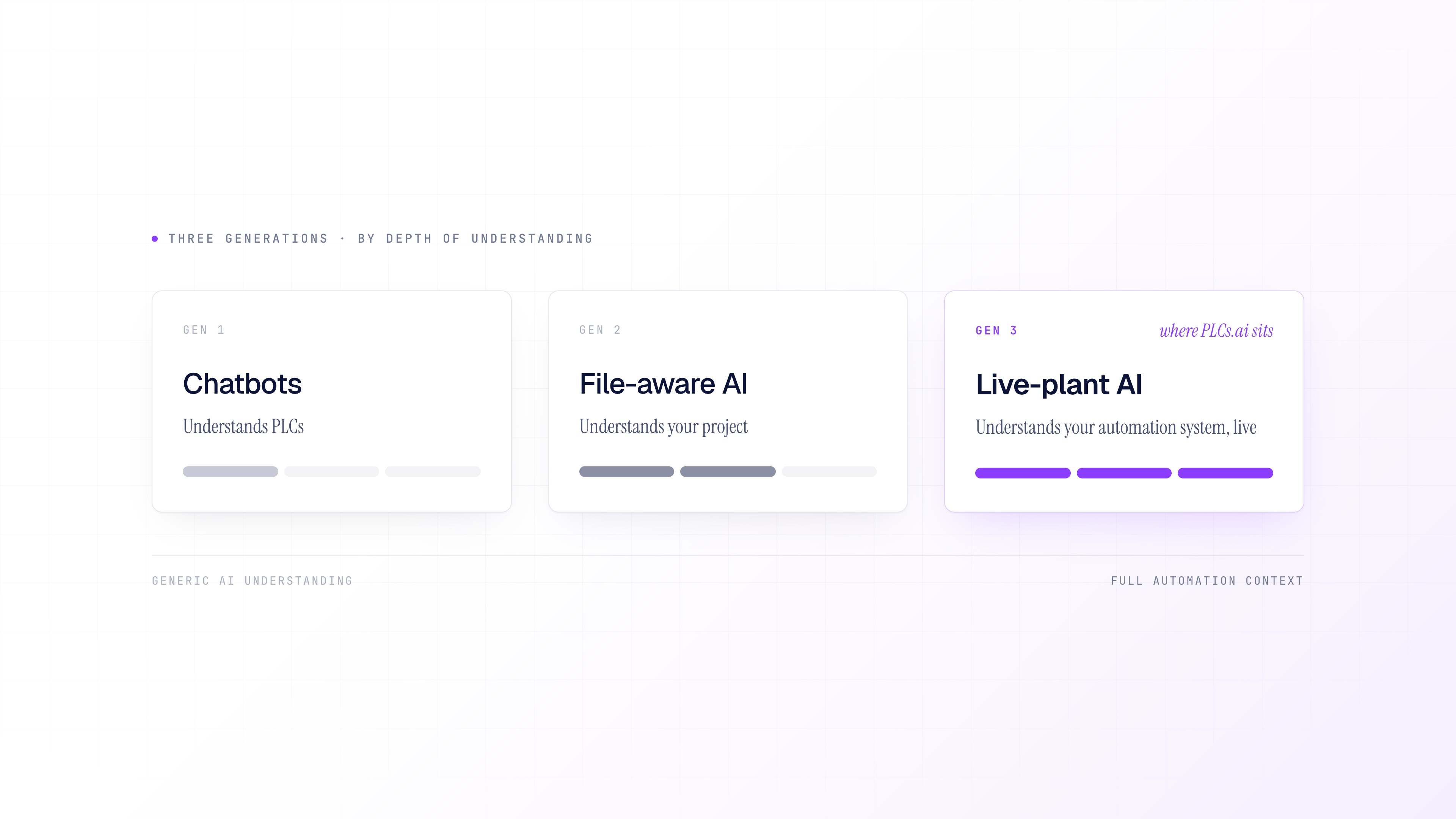
The three generations of AI for PLC work: chatbots, file-aware AI, and live-plant AI.
AI for PLC work splits into three generations: chatbots that understand PLC concepts, file-aware AI that understands your project, and live-plant AI that understands what the automation system is doing right now. Knowing which one you are looking at changes what you can ask it.
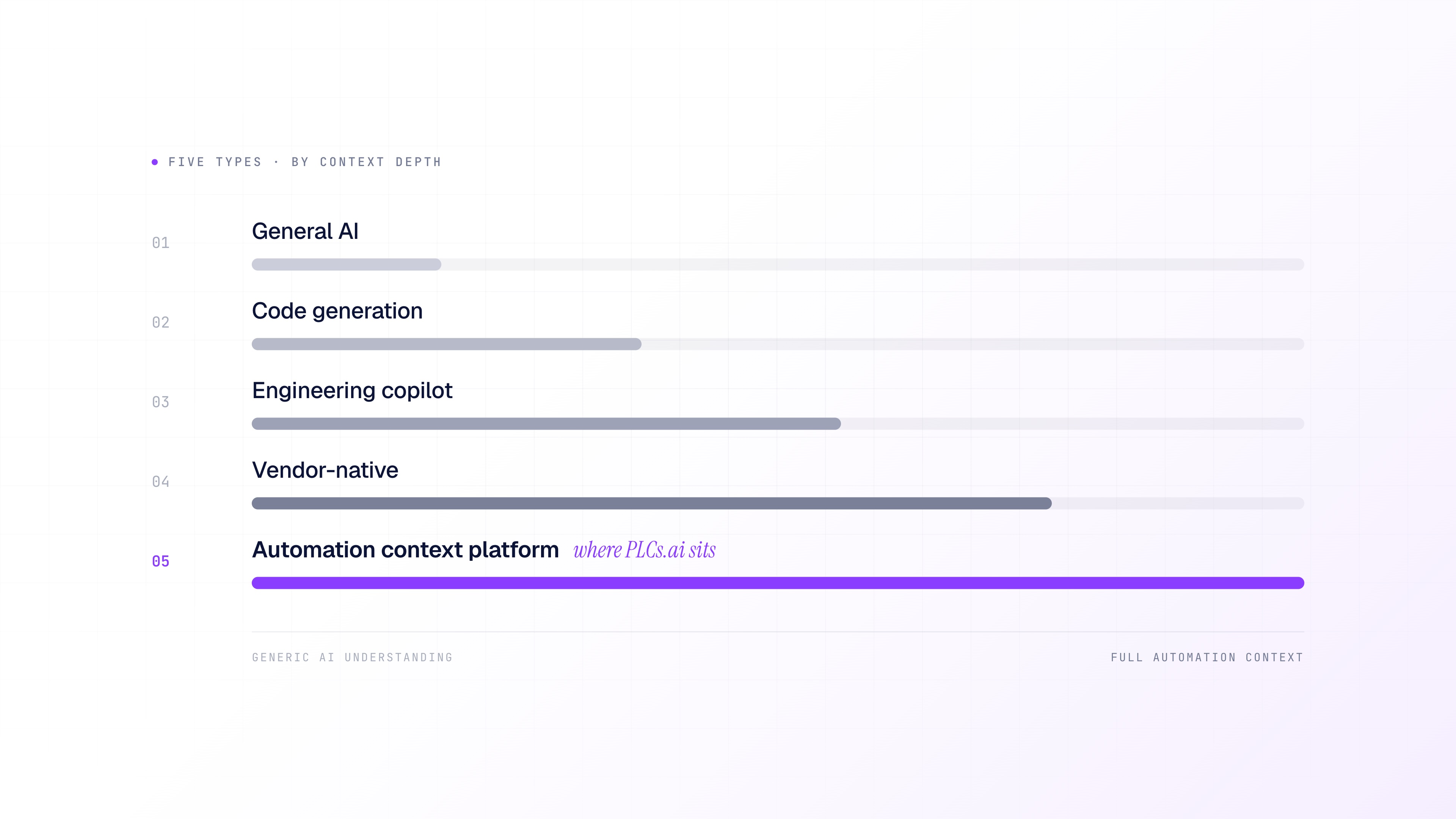
What is PLC AI? A guide to AI for PLC programming and industrial automation.
PLC AI is not one product category. It is five, and picking the wrong one costs you time before you even start. What the term means, what AI can already do with a PLC, the five types of tools on the market, and where PLCs.ai sits among them.
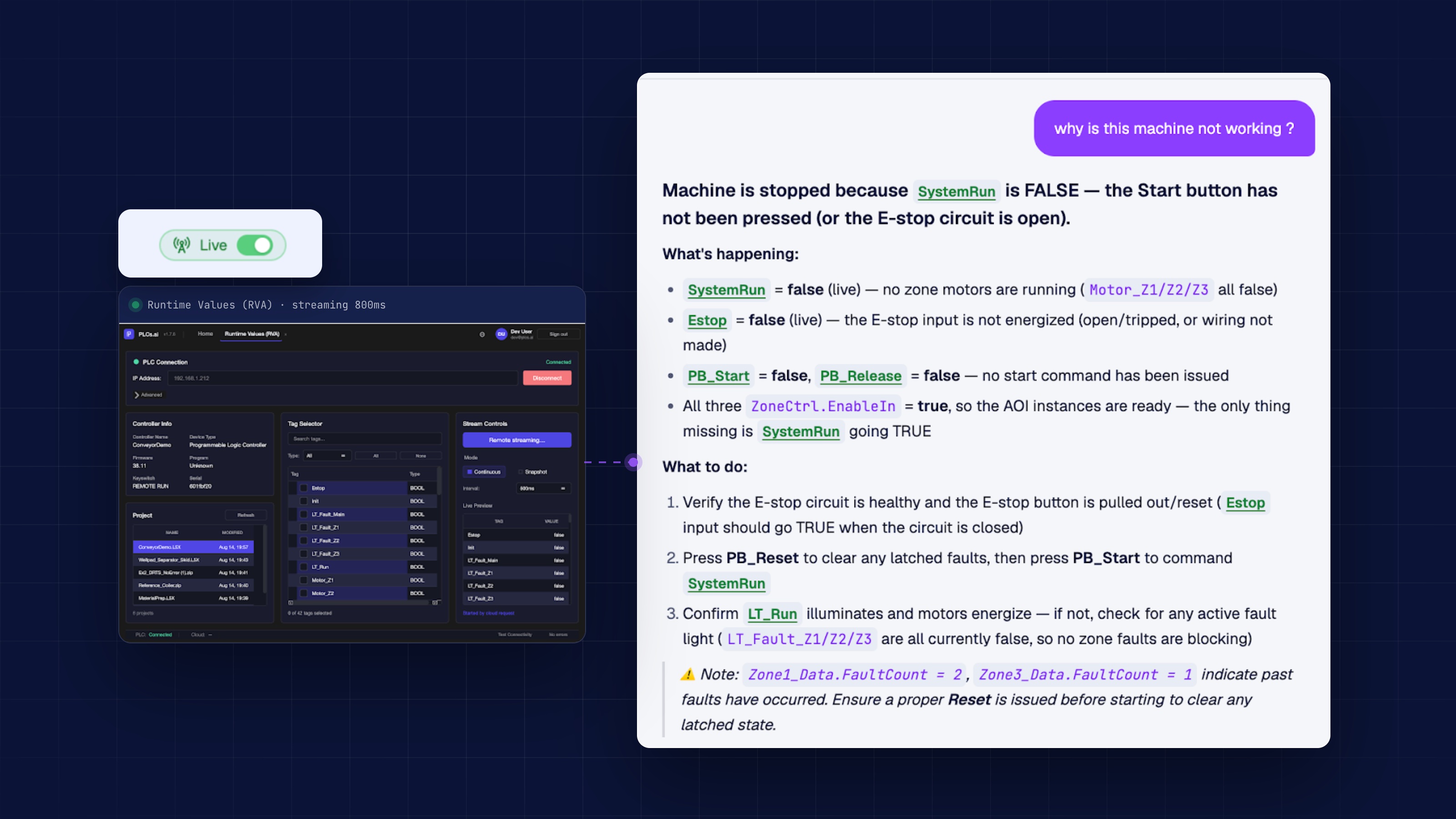
Runtime PLC data doesn’t just help troubleshooting. It multiplies it.
Reading the code tells you what a line is supposed to do. Runtime tag values tell you what it is actually doing right now. Troubleshooting needs both, and the gap between them is where most outages drag on.
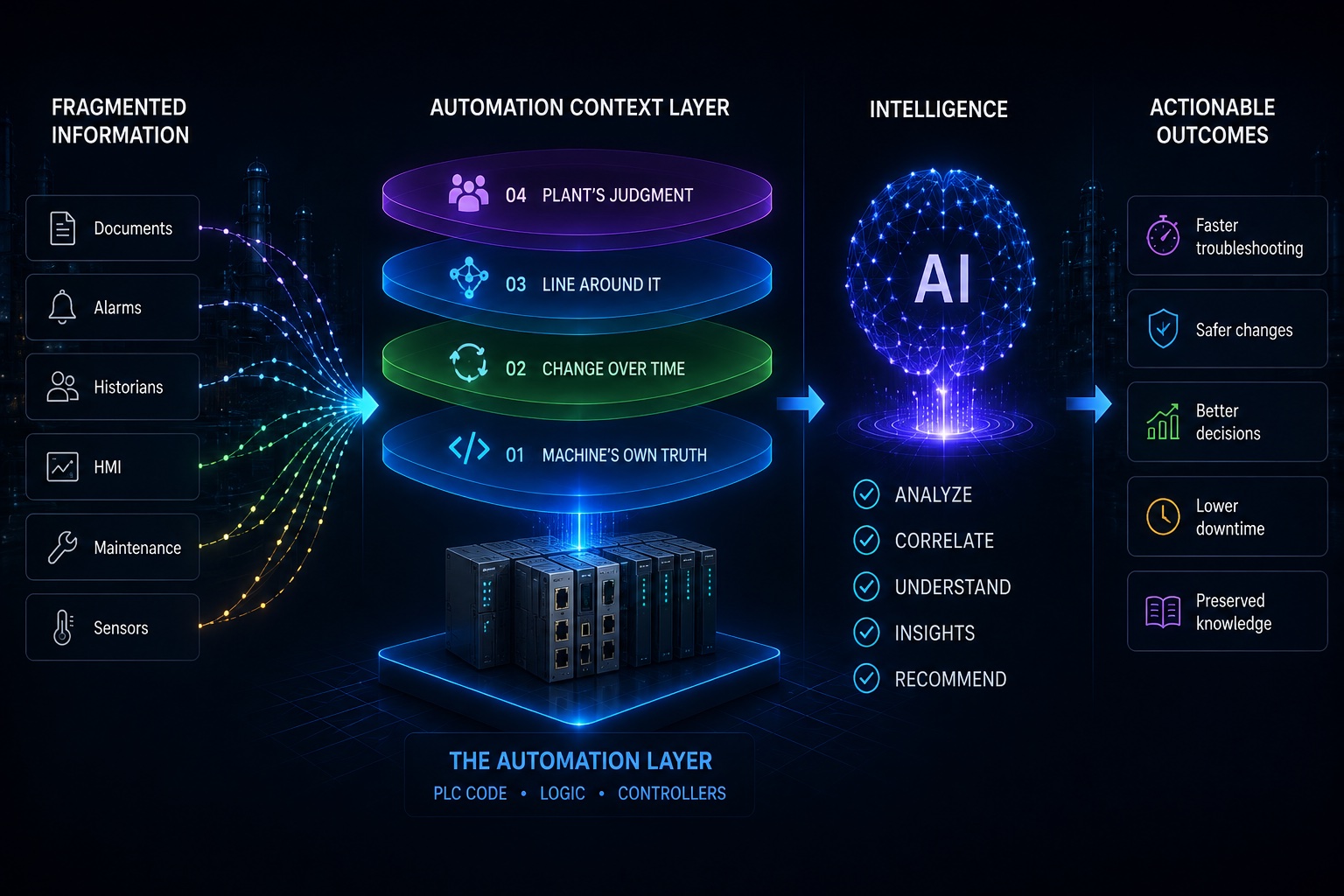
Industrial AI doesn’t have an intelligence problem. It has a context problem.
Today’s AI models are extraordinarily capable. But intelligence alone can’t tell you why a production line stopped, what an interlock protects, or what happens three stations downstream if an engineer changes a rung.
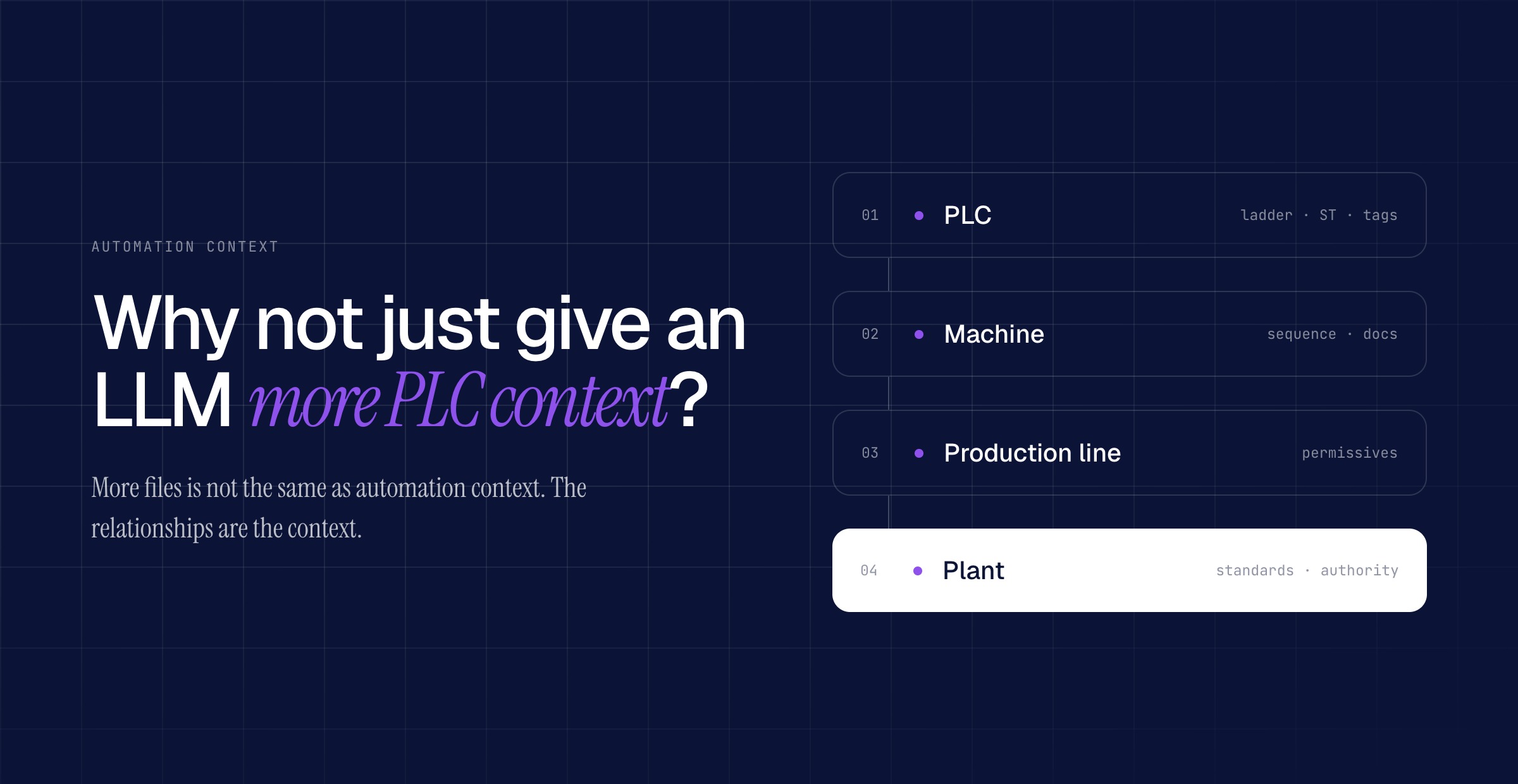
Why not just give an LLM more PLC context?
More context makes a general-purpose LLM more useful for a single PLC task. It doesn’t decide who curates that context, how conflicts between sources get resolved, how it stays current, or what happens when the AI gets it wrong. Here’s where that approach runs out.
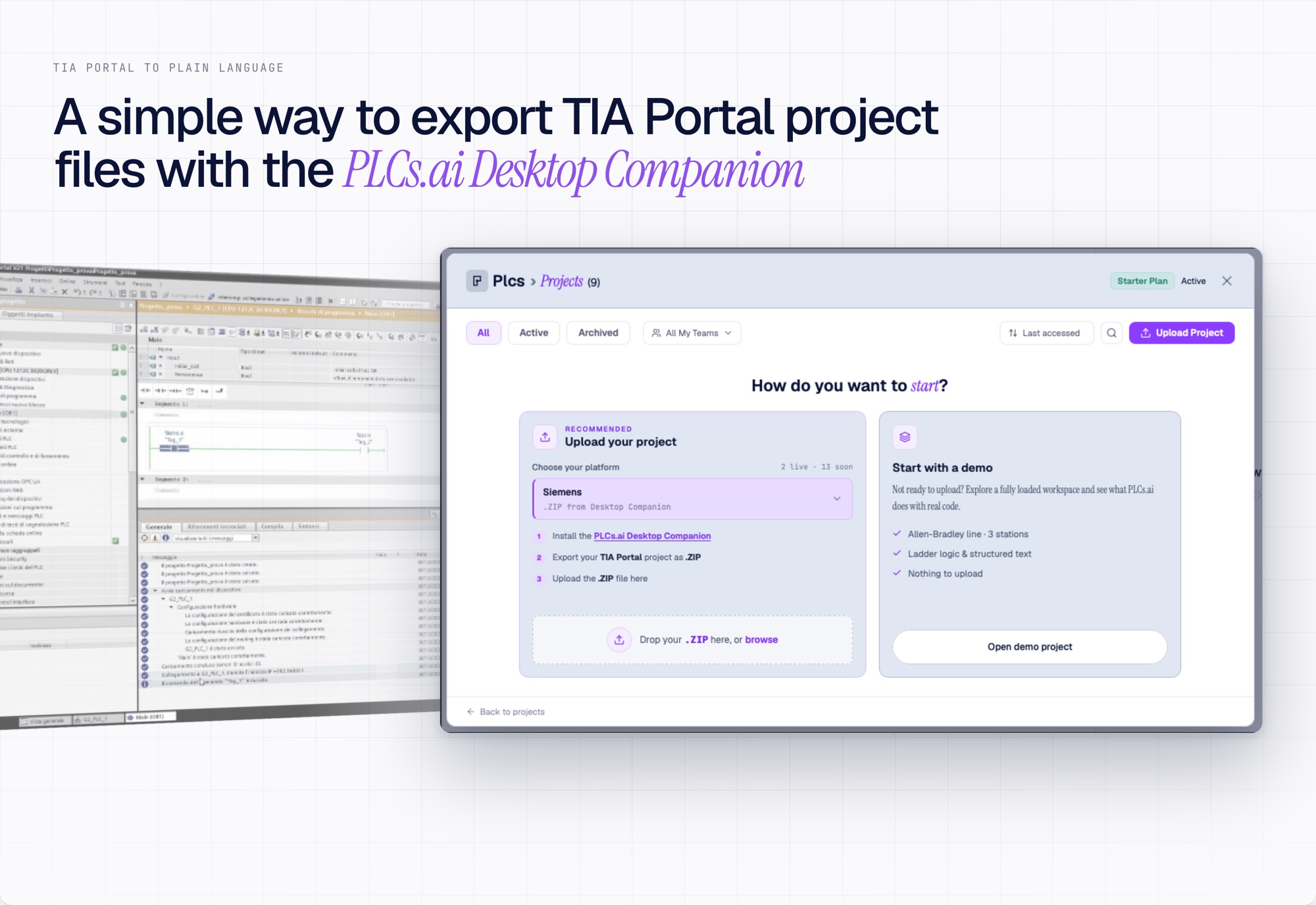
Why TIA Portal needs a Desktop Companion App, and Studio 5000 doesn’t.
Allen-Bradley gives you a clean, standard L5X export. Siemens TIA Portal doesn’t. Here’s what PLCs.ai actually supports across S7 platforms, and how the Desktop Companion App closes the export gap.
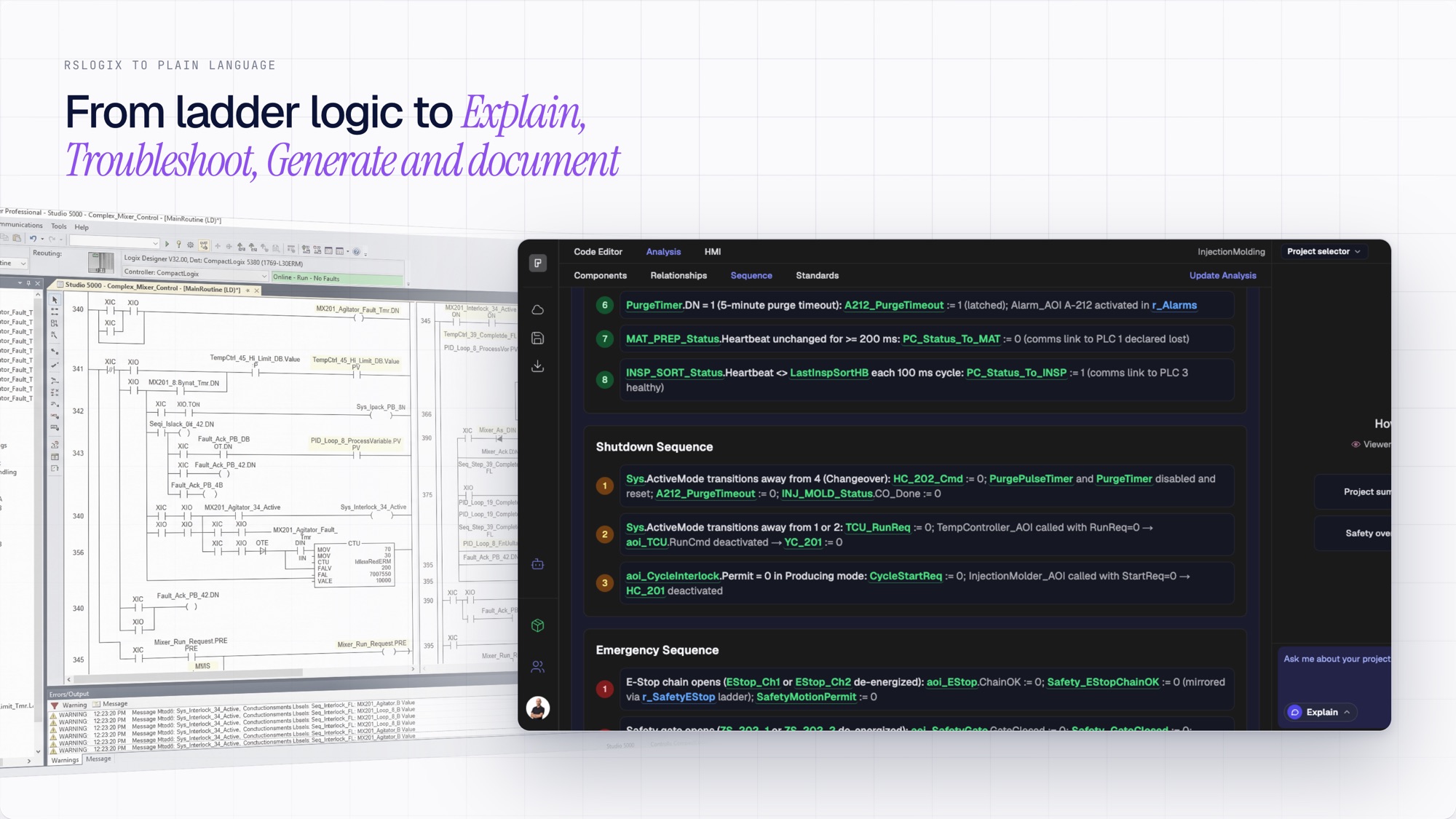
AI for Studio 5000 and Allen-Bradley PLCs, from explain to document.
Upload any Studio 5000 project and understand it in plain English. Explain, troubleshoot, generate, and document, all grounded in your actual L5X project.
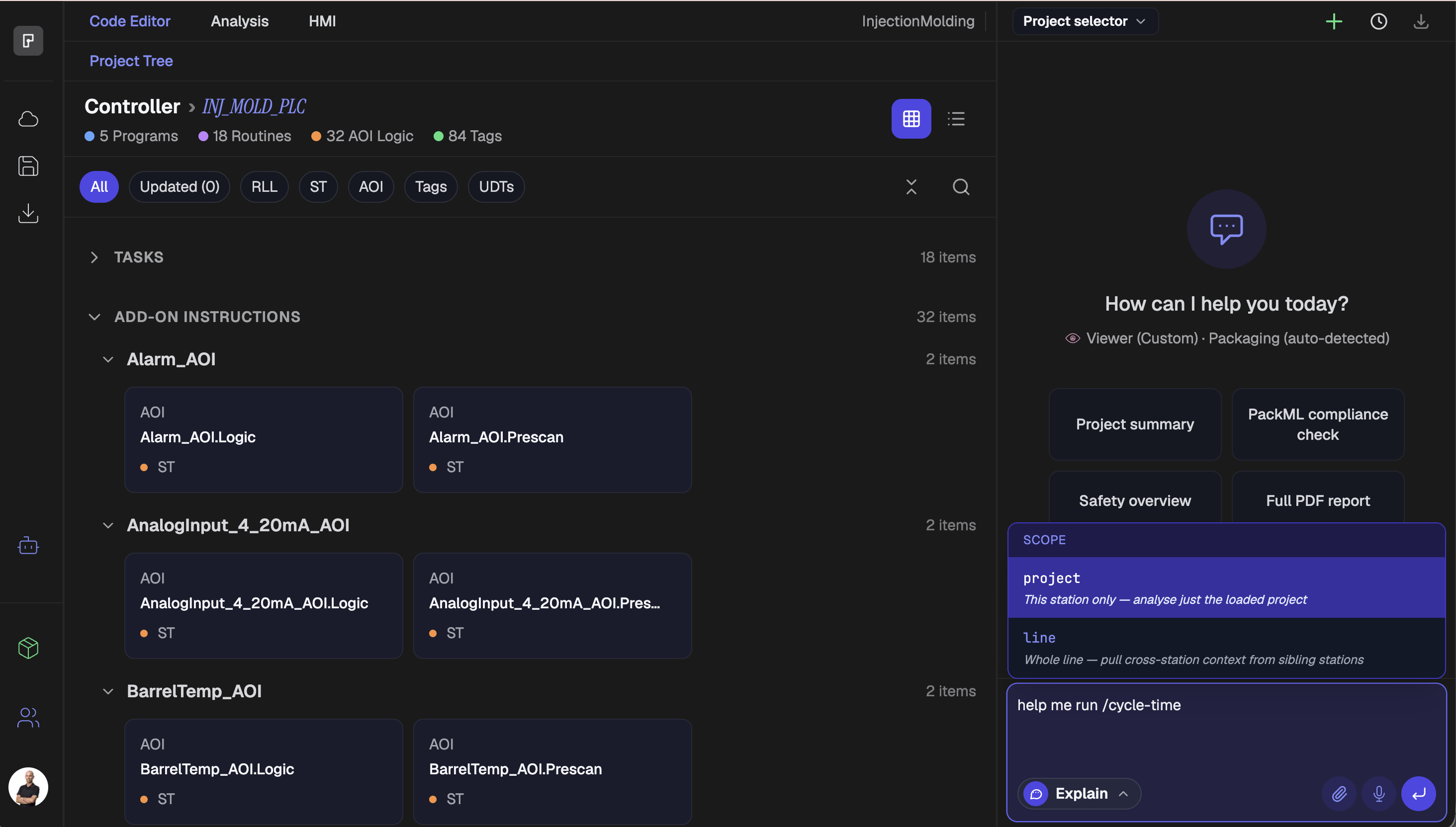
Six things every PLC engineer runs into, and how PLCs.ai finds them automatically.
Cycle-time bottlenecks, dead code, missing interlocks, broken handshakes, race conditions, and signal tracing. Plain-English explanations of concepts that usually take years on the floor to learn to spot.
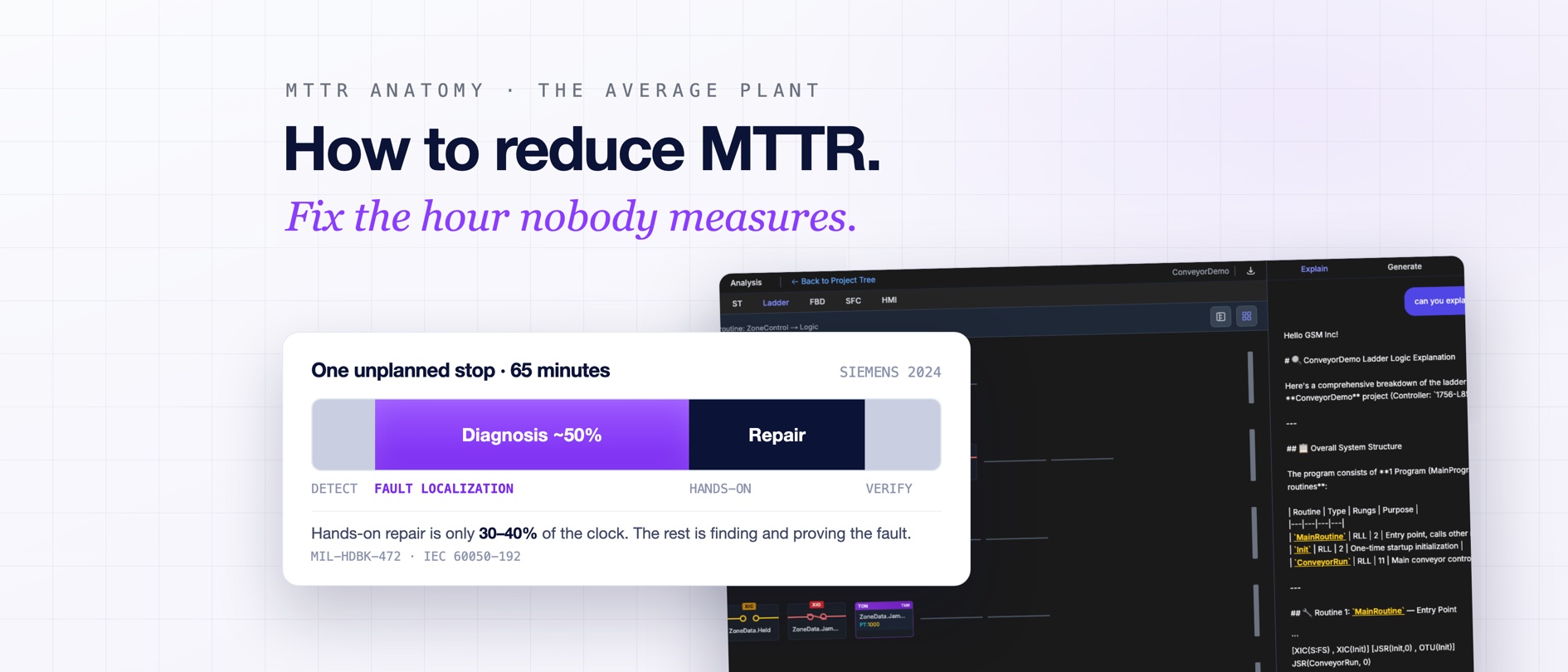
How to reduce MTTR in manufacturing: fix the hour nobody measures.
The average plant repairs an unplanned stop in 65 minutes, and most of that hour is not repair at all. A practical playbook for cutting MTTR by attacking diagnosis, the phase most plants do not even measure.
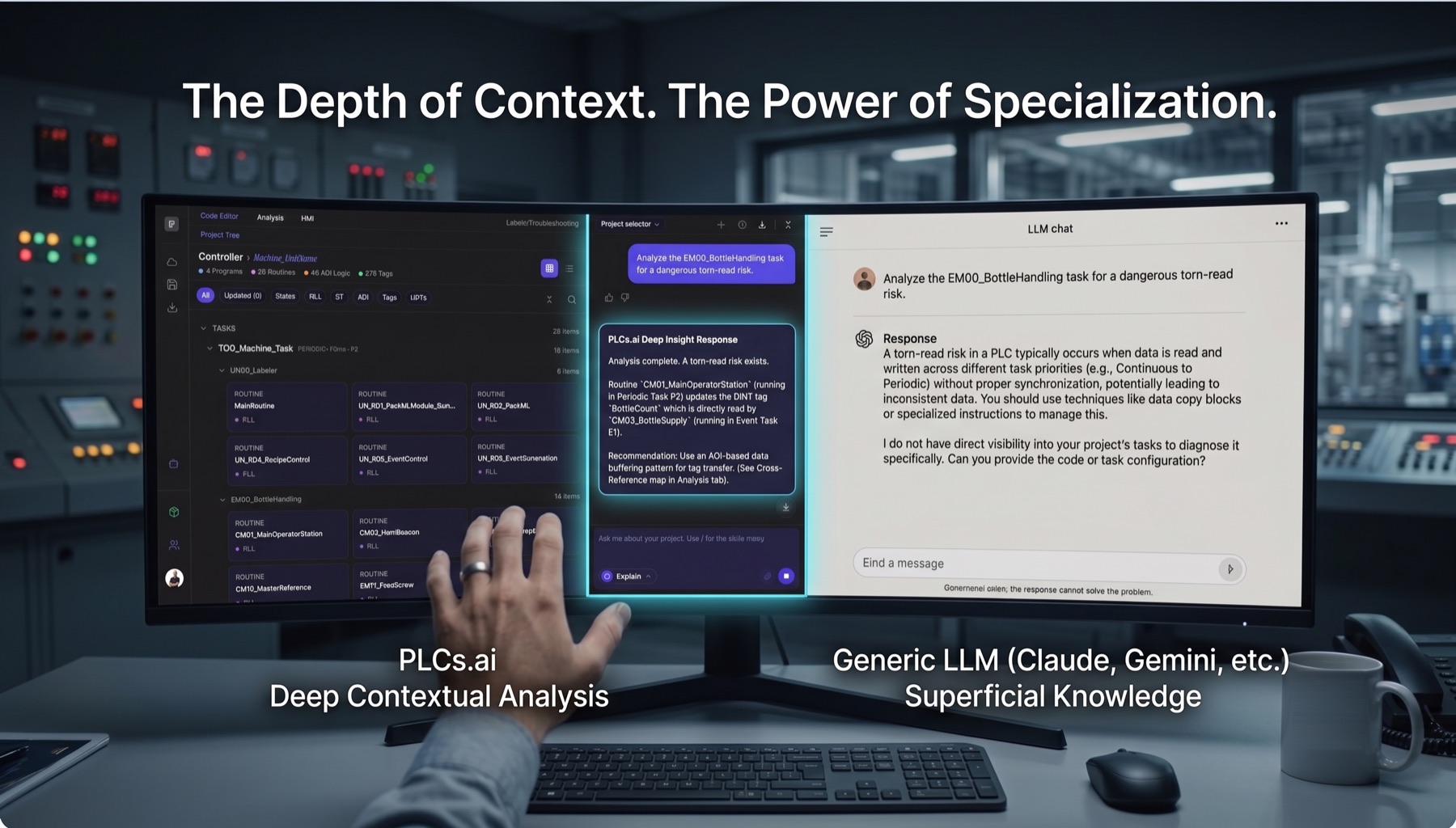
PLCs.ai vs. pasting your PLC files into ChatGPT.
A general-purpose chatbot can read a snippet of ladder logic. It can't reason across your whole project, simulate a change before it goes live, or guarantee your PLC code never trains someone else's model.
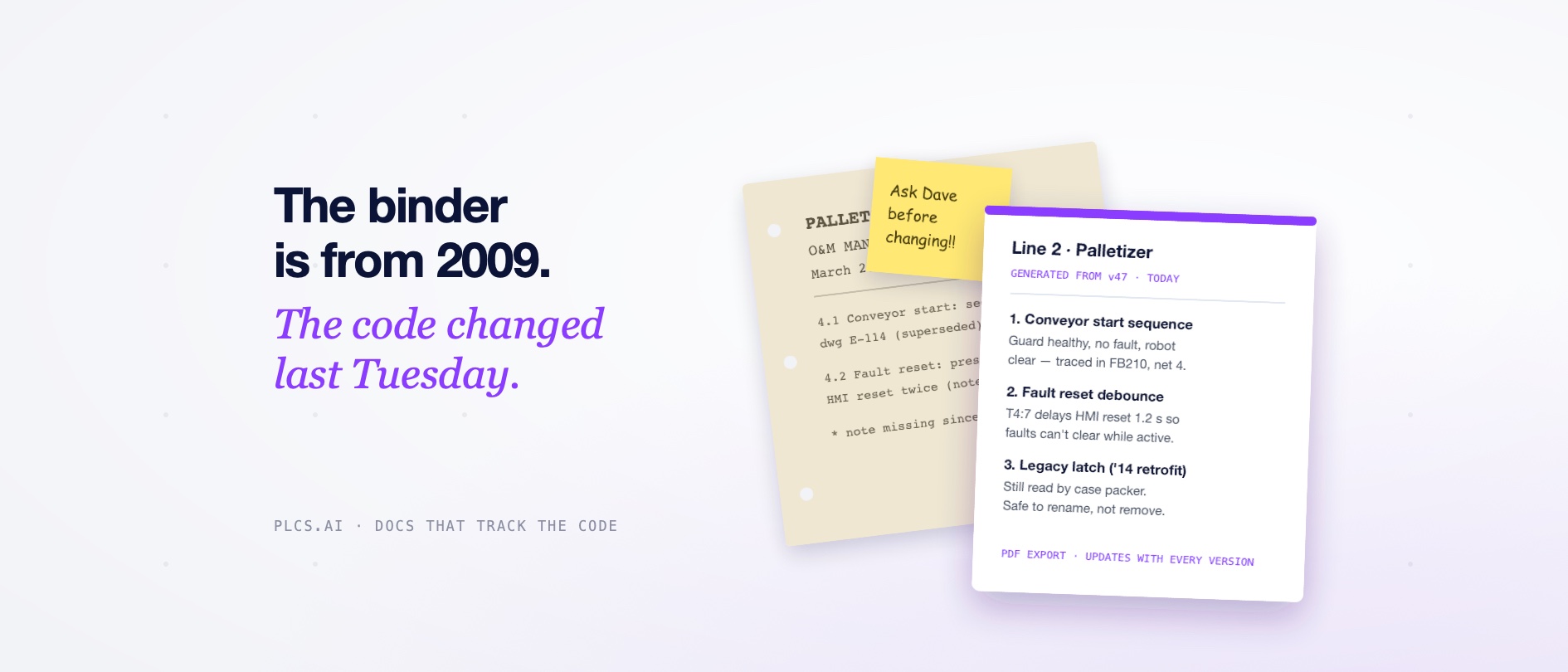
How to document PLC code, without anyone writing documentation.
Most PLC documentation is written once, under time pressure, at the end of commissioning, and it starts going stale the day after. The fix is not more discipline. It is making documentation a byproduct of the code instead of a chore after it.
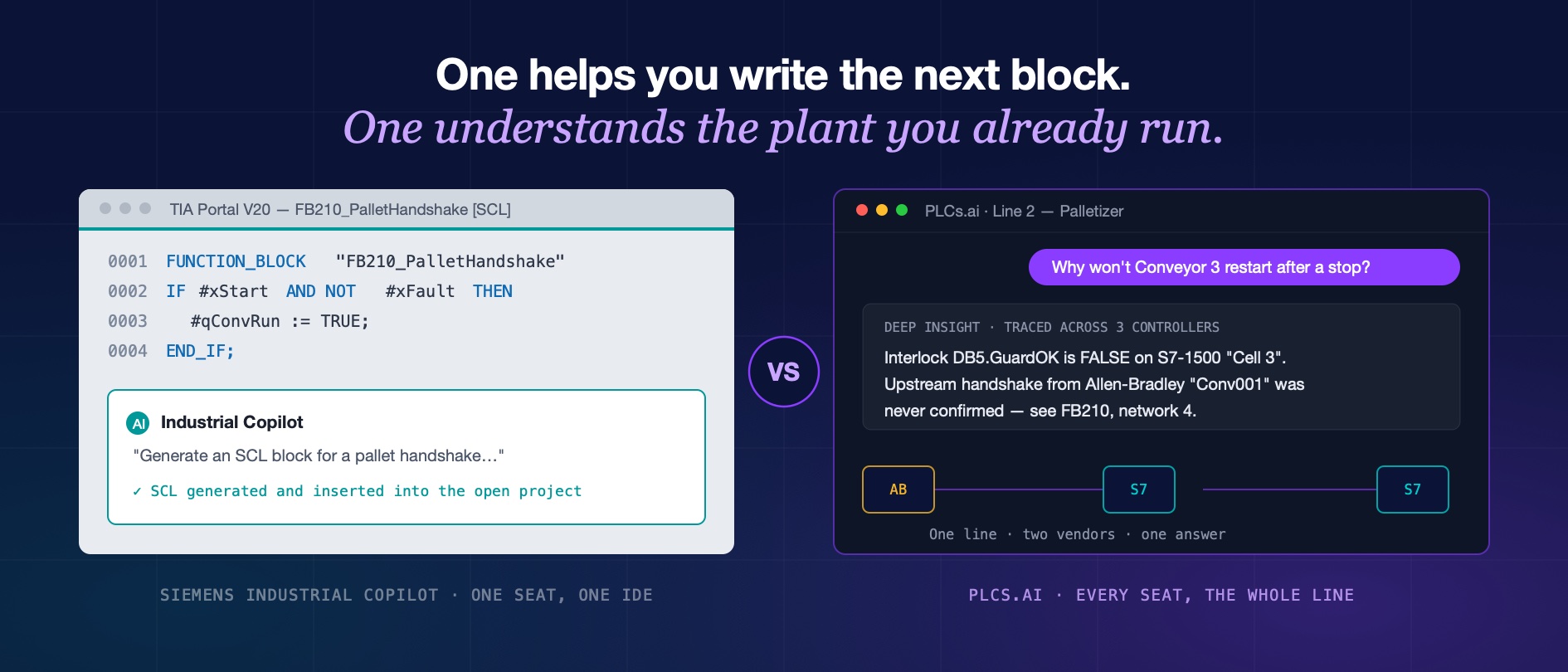
PLCs.ai vs. Siemens Industrial Copilot: which one do you need?
They sound like the same product. They are not. Siemens Industrial Copilot is an authoring assistant inside TIA Portal. PLCs.ai is an intelligence layer over your whole installed base, Siemens and Allen-Bradley alike. Here is an honest breakdown.
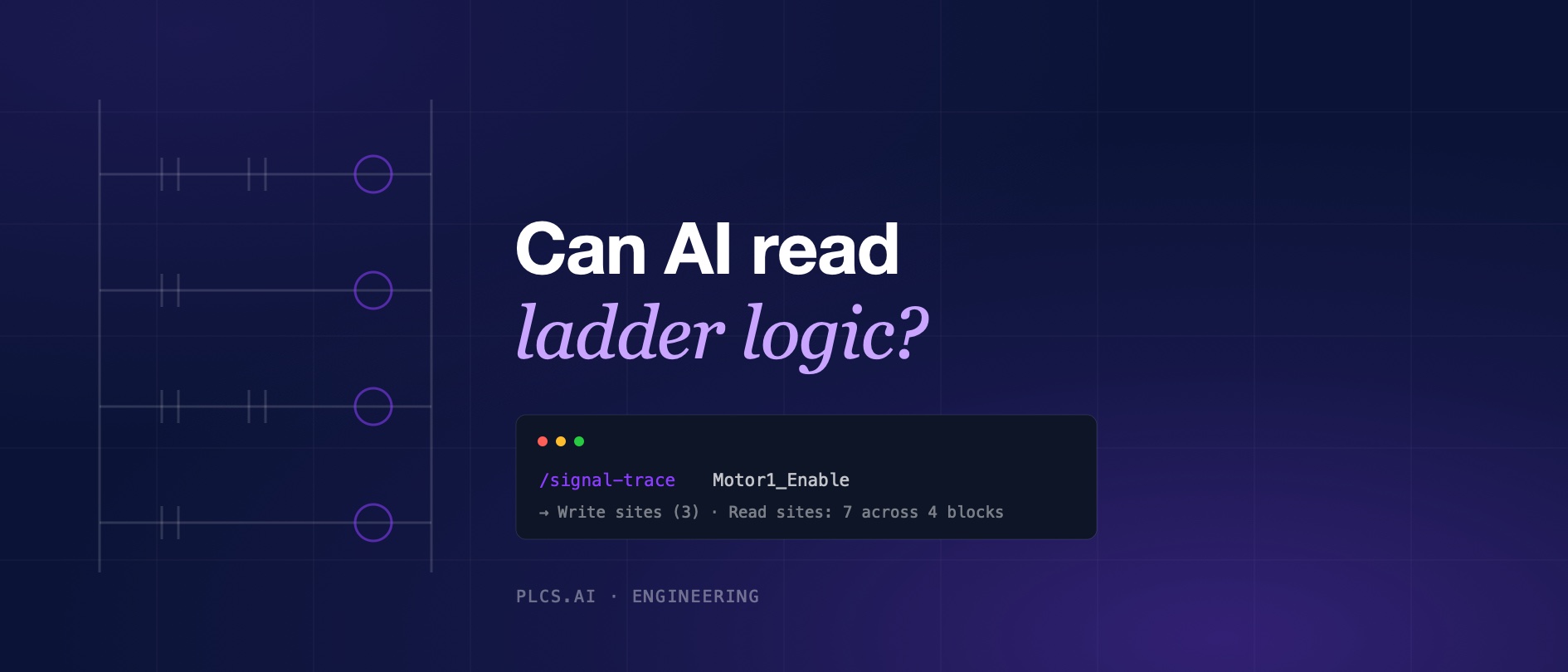
Can AI read ladder logic? Here is what actually works.
Yes, modern AI can read ladder logic. The real question is whether it can read yours: the whole project, the tag aliases, the UDTs, the line around it. That is where most tools stop and where the useful work begins.
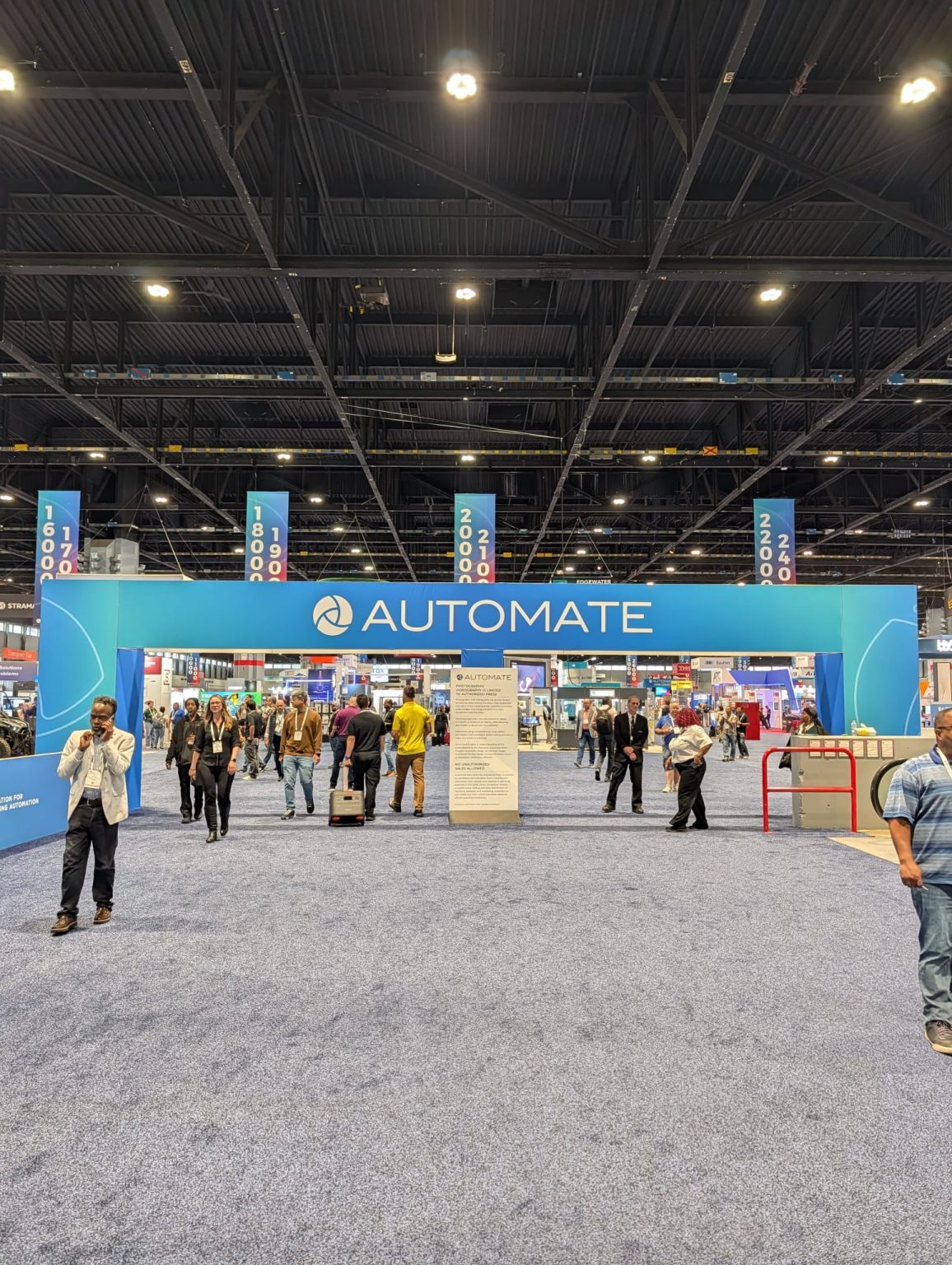
PLCs.ai is heading to Automate 2026, and skipping the booth.
We do not have a booth and we are not chasing badge scans. We want to talk to the engineers and plant managers living downtime every day.
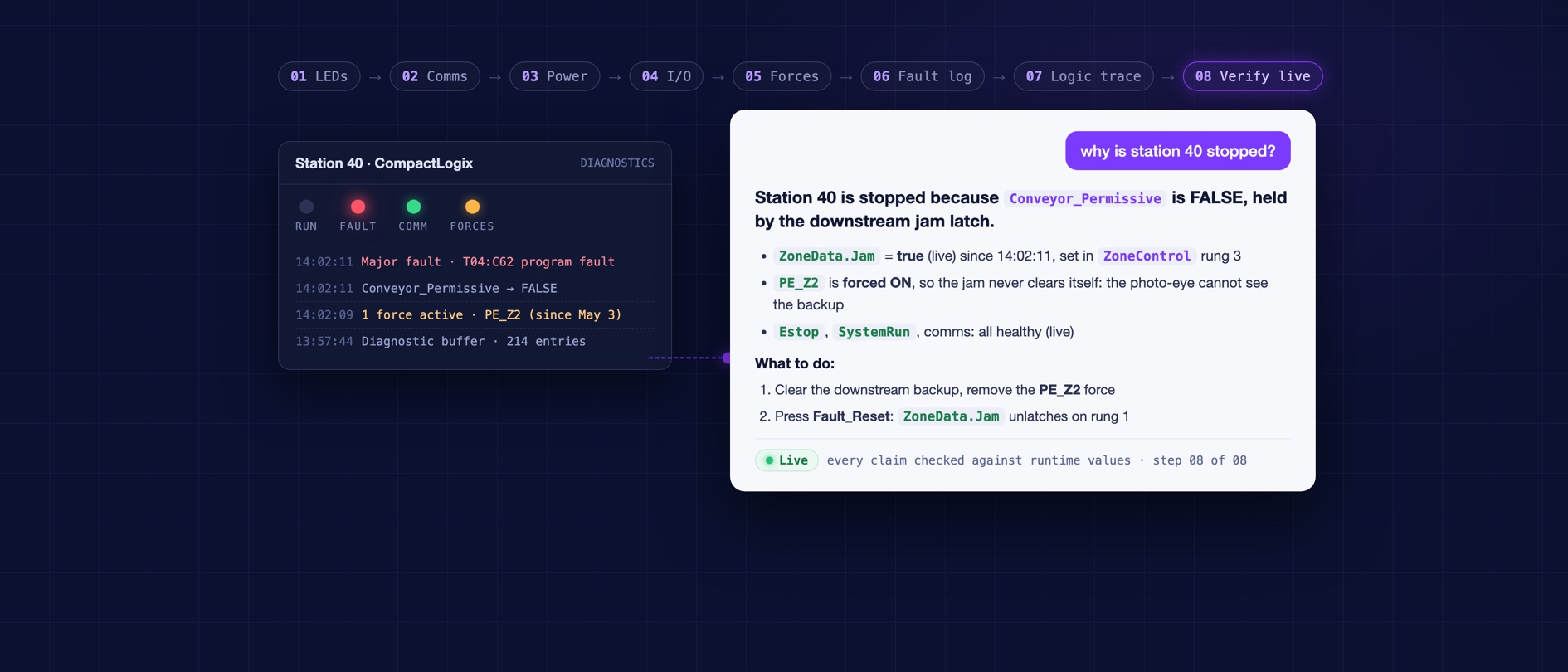
PLC troubleshooting: the complete guide for 2026.
A systematic eight-step method for troubleshooting PLC faults, from status LEDs to live tag values. Written for the engineer staring at a stopped line, with the checks in the order that finds the fault fastest.
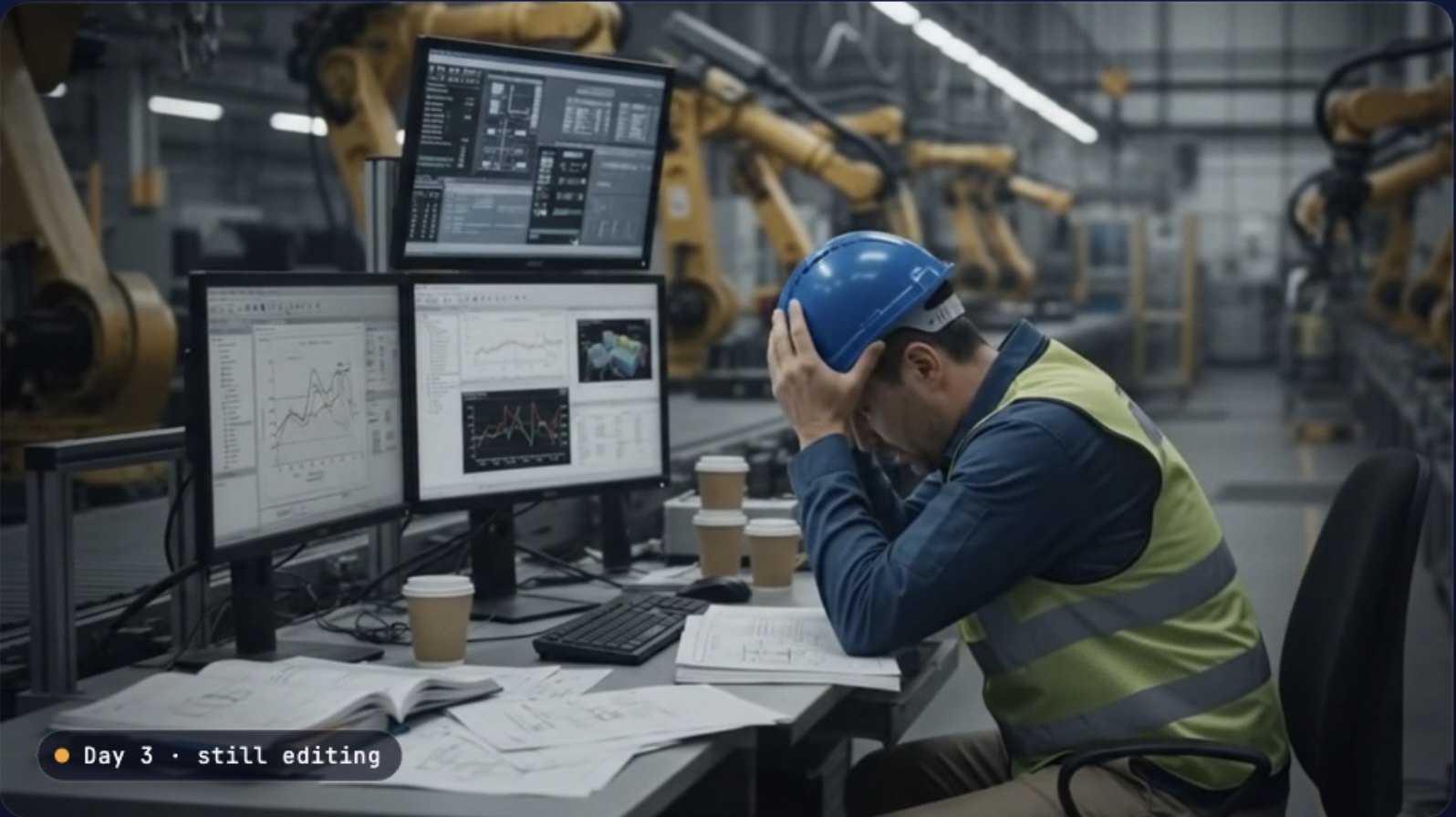
We are changing the way engineers run production line automation.
If modifying a PLC project takes days, the real problem is not the code. It is that no one fully understands it. Here is what we are building to change that.
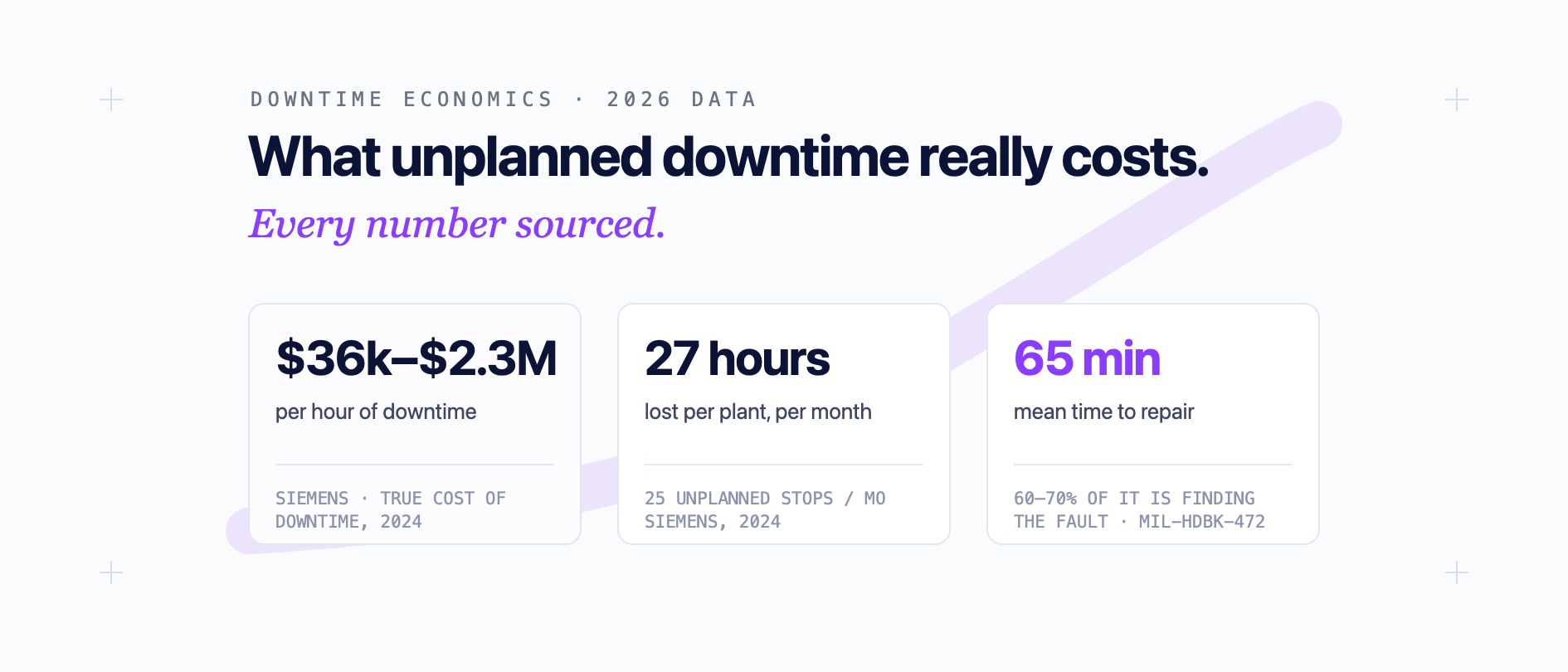
What unplanned downtime really costs in 2026, with sources.
Every article quotes a different cost of downtime, and most of them trace back to the same recycled estimate. Here are the numbers that hold up, where each one comes from, and how to price an hour of downtime at your own plant.
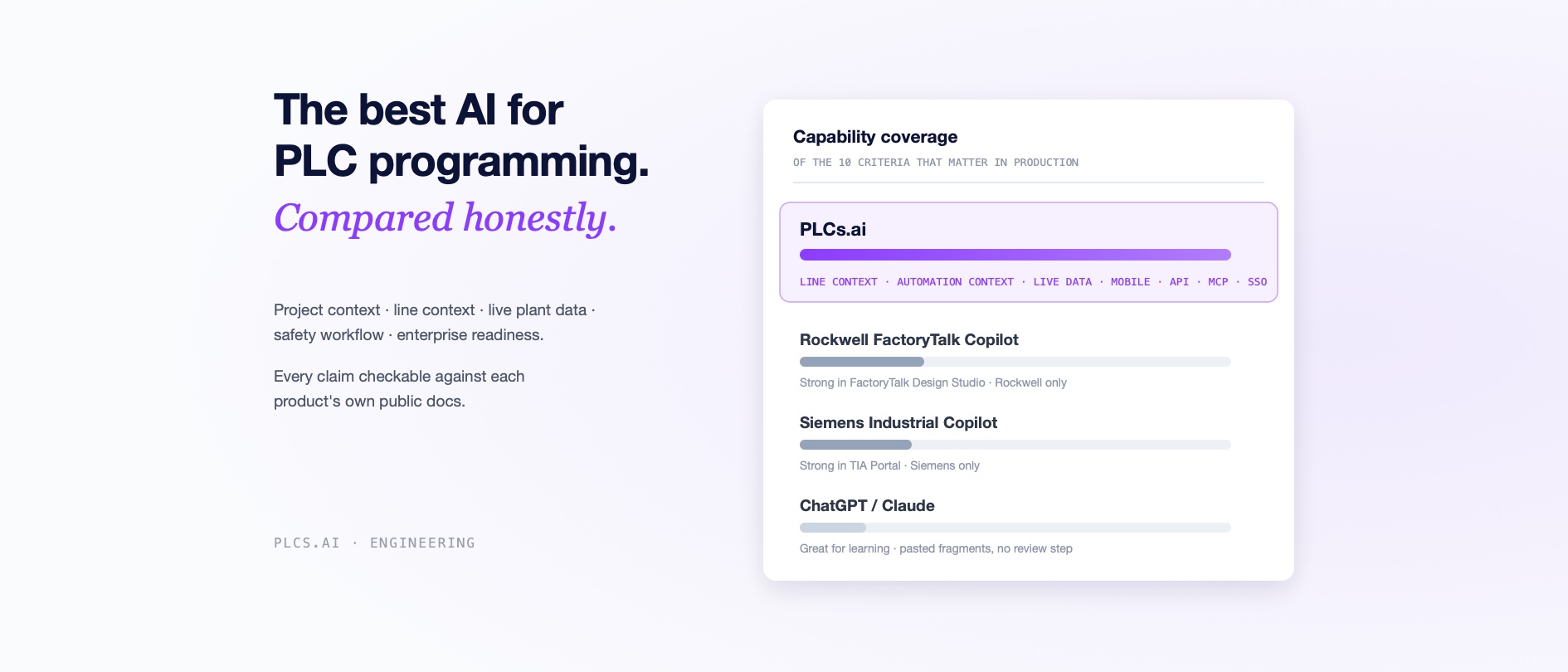
The best AI for PLC programming in 2026, compared honestly.
We build one of the tools in this comparison, so judge the claims, not the author: every row below is checkable against each product's own public documentation. The short version — most tools help one engineer write code faster. Only one reads your whole line.
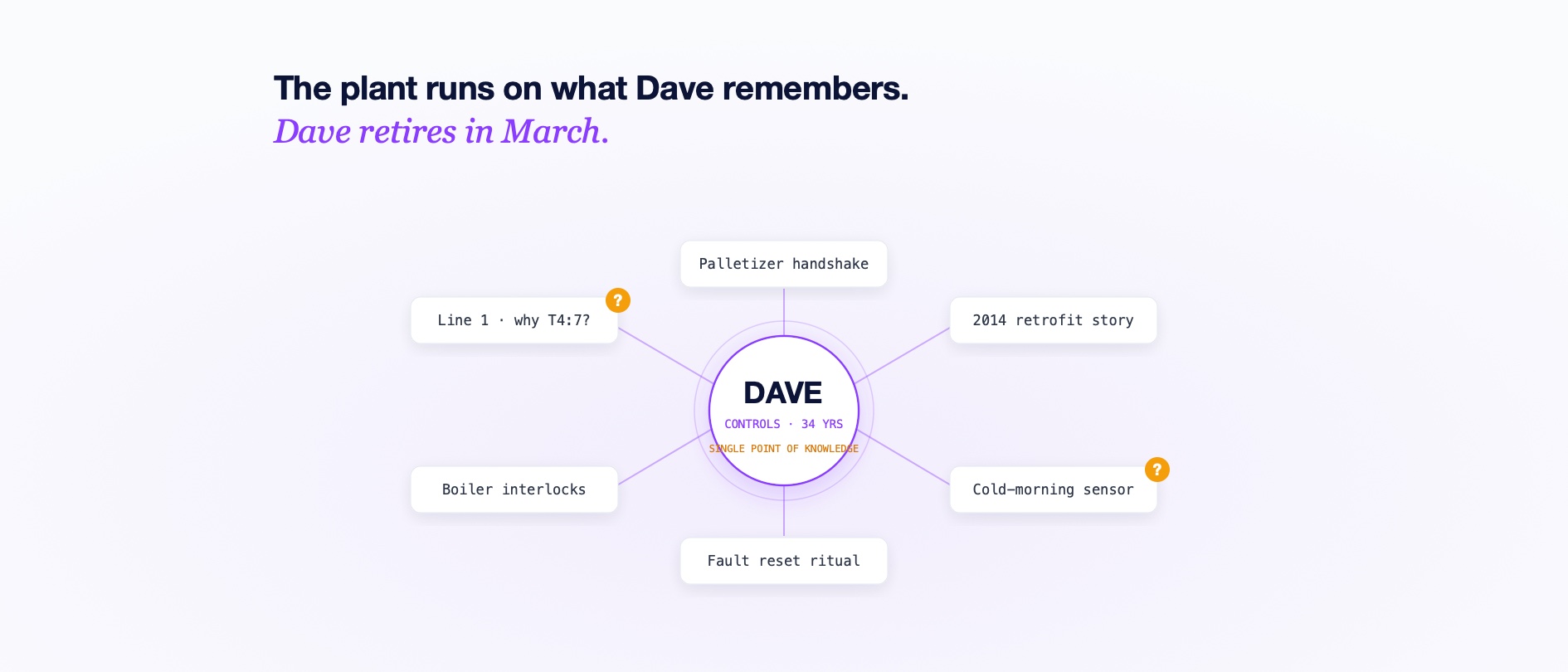
What happens when your best PLC engineer retires?
Every plant has one: the engineer who knows why the timer is set to 1.2 seconds, which interlock you can never bypass, and what actually happened during the 2014 retrofit. When they leave, that knowledge leaves with them. It does not have to.
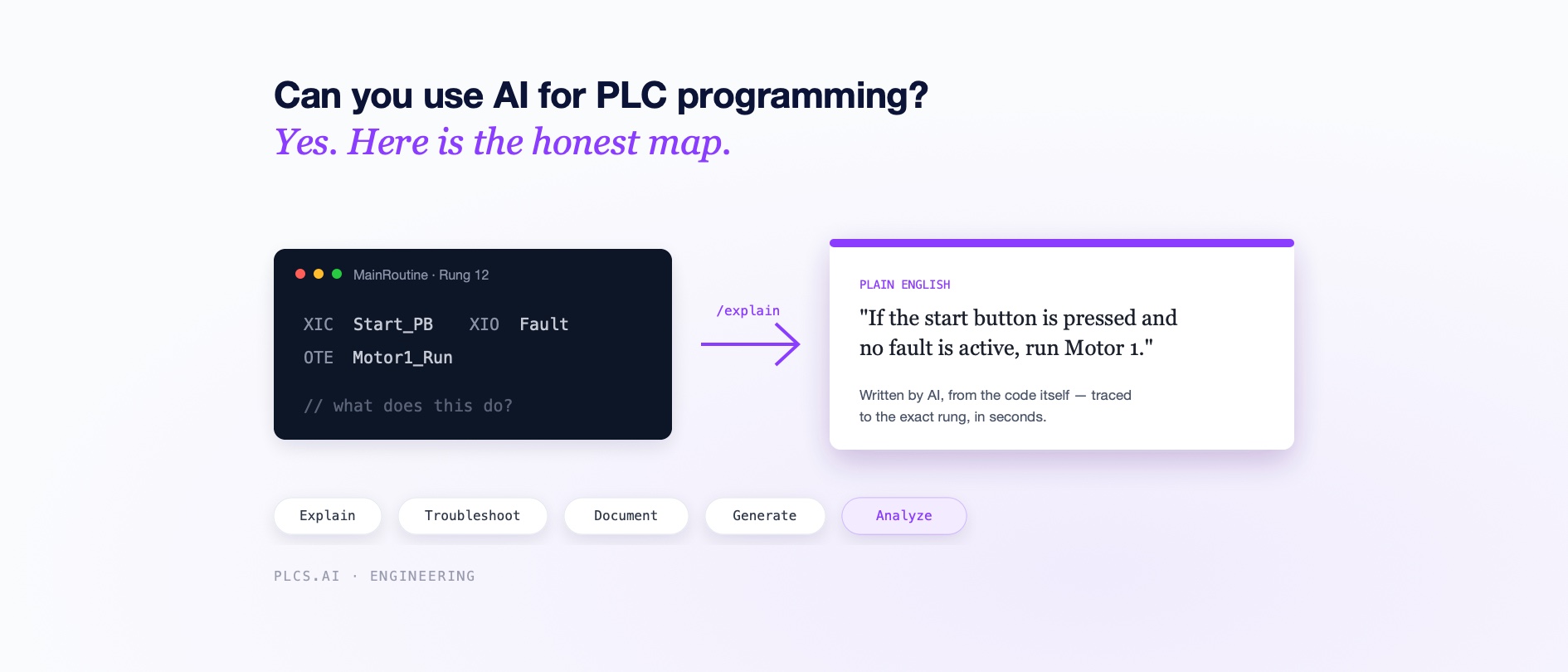
Can you use AI for PLC programming? An honest guide.
Yes. AI can already read, explain, troubleshoot, document, and generate PLC code — and it is already doing so on production lines. What it can do, where it still fails, and what that means for the people who program PLCs for a living.
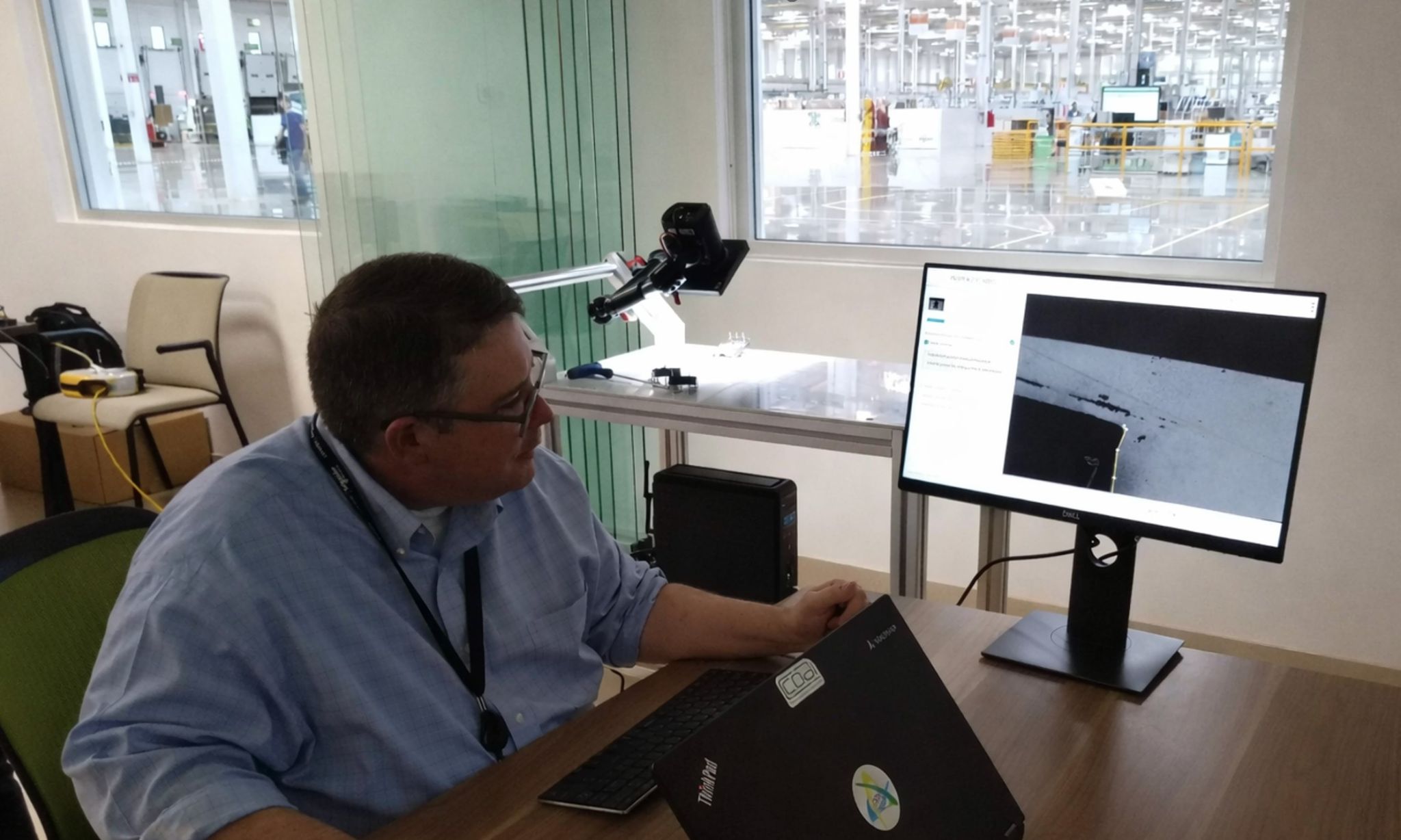
PLCs.ai welcomes Brian Tessier as an advisor to stay grounded in real manufacturing.
Brian Tessier, former VP Innovation at Schneider Electric, joins PLCs.ai as an advisor, bringing deep experience from the production floor to the executive suite.

PLCs.ai raises a $4M seed round to make PLC code universally accessible.
The round was led by Avila VC, with participation from Ocean Azul Partners, Sugar Free Capital, and ICI Fund.