
PLCs.ai vs. Siemens Industrial Copilot: which one do you need?
They sound like the same product. They are not. Siemens Industrial Copilot is an authoring assistant inside TIA Portal. PLCs.ai is an intelligence layer over your whole installed base, Siemens and Allen-Bradley alike. Here is an honest breakdown.
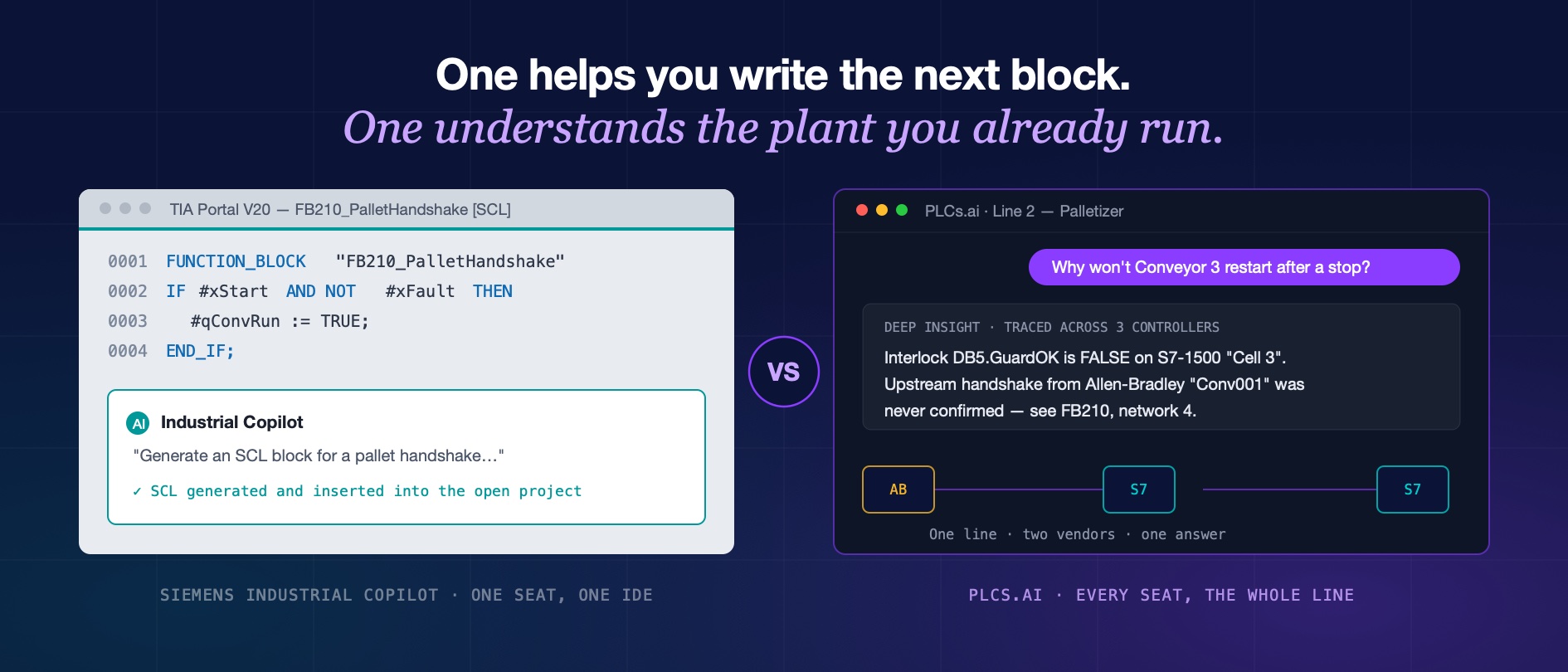
If you run Siemens PLCs, you have probably been asked about both. They sound like the same product. They are not. Siemens Industrial Copilot is an authoring assistant that lives inside TIA Portal and helps an engineer write new code faster. PLCs.ai is an intelligence layer over your whole installed base, Siemens and Allen-Bradley alike, built for the day the line stops and someone who did not write the code has to understand it. Here is an honest breakdown of what each is for.
What Siemens Industrial Copilot is good at
Industrial Copilot is genuinely strong at what it was built for: engineering productivity inside the Siemens toolchain.
- 01Generating SCL code from natural language, inserted directly into the open TIA Portal project with no copy-paste.
- 02Explaining SCL blocks and answering engineering questions without leaving the IDE.
- 03Searching Siemens manuals and documentation in plain language.
- 04Generating test cases, WinCC Unified visualization scaffolding, and drive configurations.
- 05Enterprise deployment on a private Azure OpenAI instance that does not train on customer data.
If your plant is Siemens end to end and the job in front of you is writing new SCL inside TIA Portal, it is a genuinely useful tool.
Where PLCs.ai starts from a different question
PLCs.ai was not built around the engineer authoring new code at a desk. It was built around the stopped line: the moment someone has to understand fifteen years of another person’s logic, across more than one controller, often without a TIA Portal or Studio 5000 license anywhere nearby.
- 01Vendor breadth. PLCs.ai reads Allen-Bradley (Studio 5000, L5X) and Siemens (TIA Portal, via the Openness API) in full production. Most real plants run both; Industrial Copilot is Siemens-only by design.
- 02The whole line, not one project. 3D Line Context reasons across every PLC on a production line, even mixed Rockwell and Siemens lines, as one surface.
- 03The whole team, not one seat. Anyone, maintenance techs, plant managers, junior engineers, can ask questions in plain English from a browser. No IDE, no engineering workstation, no seat fees.
- 04Ladder logic as a first-class citizen. Brownfield reality is LAD and legacy code, not just clean new SCL.
- 05Live plant data. The Desktop Companion App streams live tag values from the running controller, so troubleshooting is grounded in what the line is doing right now.
- 06Your own knowledge base. Every query runs against your approved code examples, standards, and specs, and every insight is versioned so it survives staff turnover.
Industrial Copilot helps one engineer write the next block faster. PLCs.ai helps the whole plant understand the fifteen years of code it already runs.
Which one do you need?
It depends on the job. If you are a Siemens-only operation with strong TIA Portal engineering capacity and your bottleneck is authoring new code, Industrial Copilot fits naturally inside the workflow you already have.
If your fleet is mixed, your pain is troubleshooting and downtime rather than greenfield authoring, or you want people beyond the controls team to understand what the line is doing, that is the job PLCs.ai was built for. Plenty of plants will sensibly run both: Copilot at the engineering workstation, PLCs.ai across the floor.
The honest test is the same one we give every tool: bring the question your team asked during the last outage, and see which one answers it.
See what PLCs.ai does with a TIA Portal project →How we compare to general-purpose chatbots →More from the blog
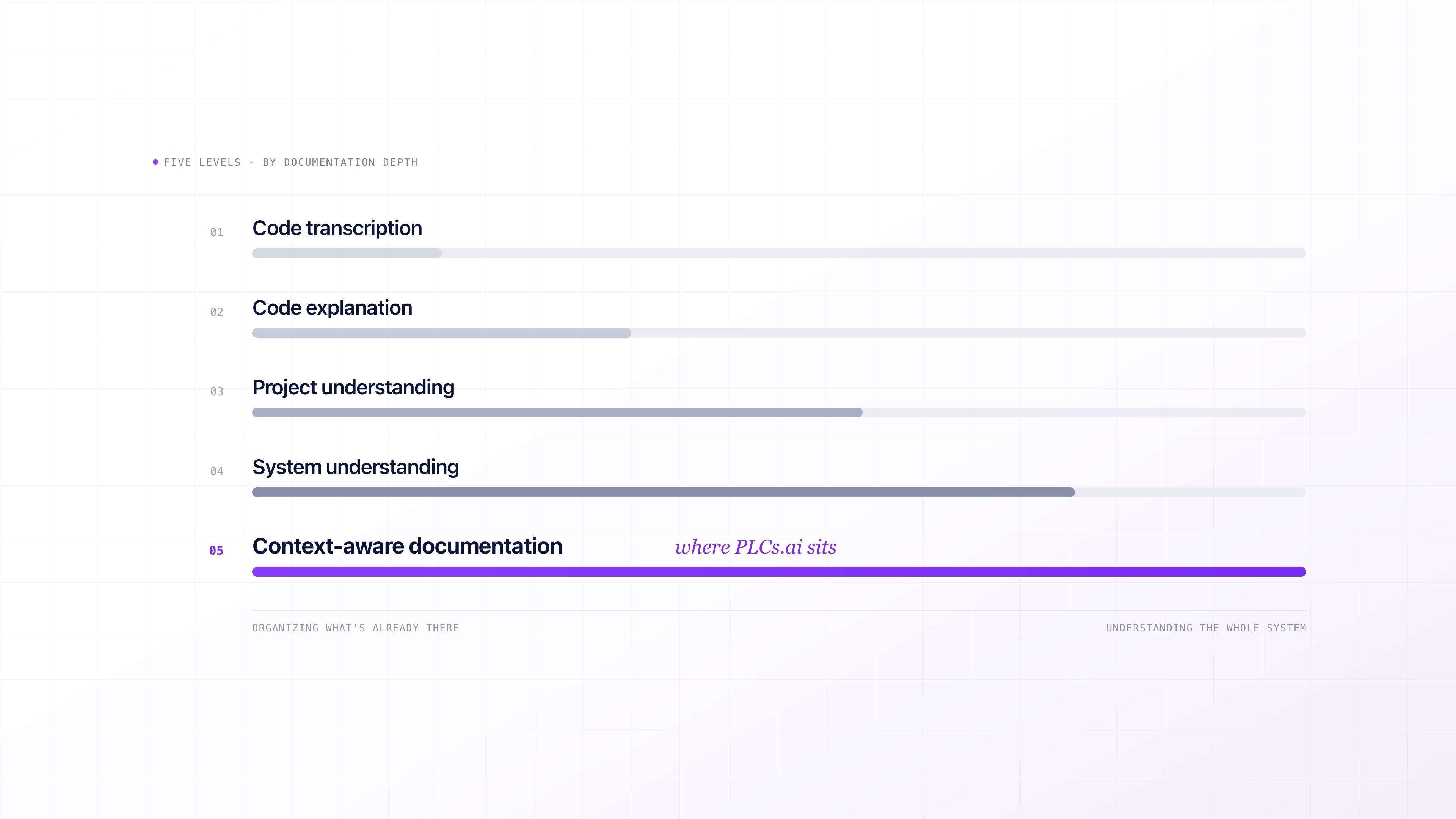
PLC documentation software: 9 tools compared (2026).
Automatic PLC documentation ranges from deterministic tools that reformat what is already in the project, to AI that infers meaning from undocumented code, to platforms that generate documentation from a broader understanding of the automation system. Nine real tools, compared on what they actually do.
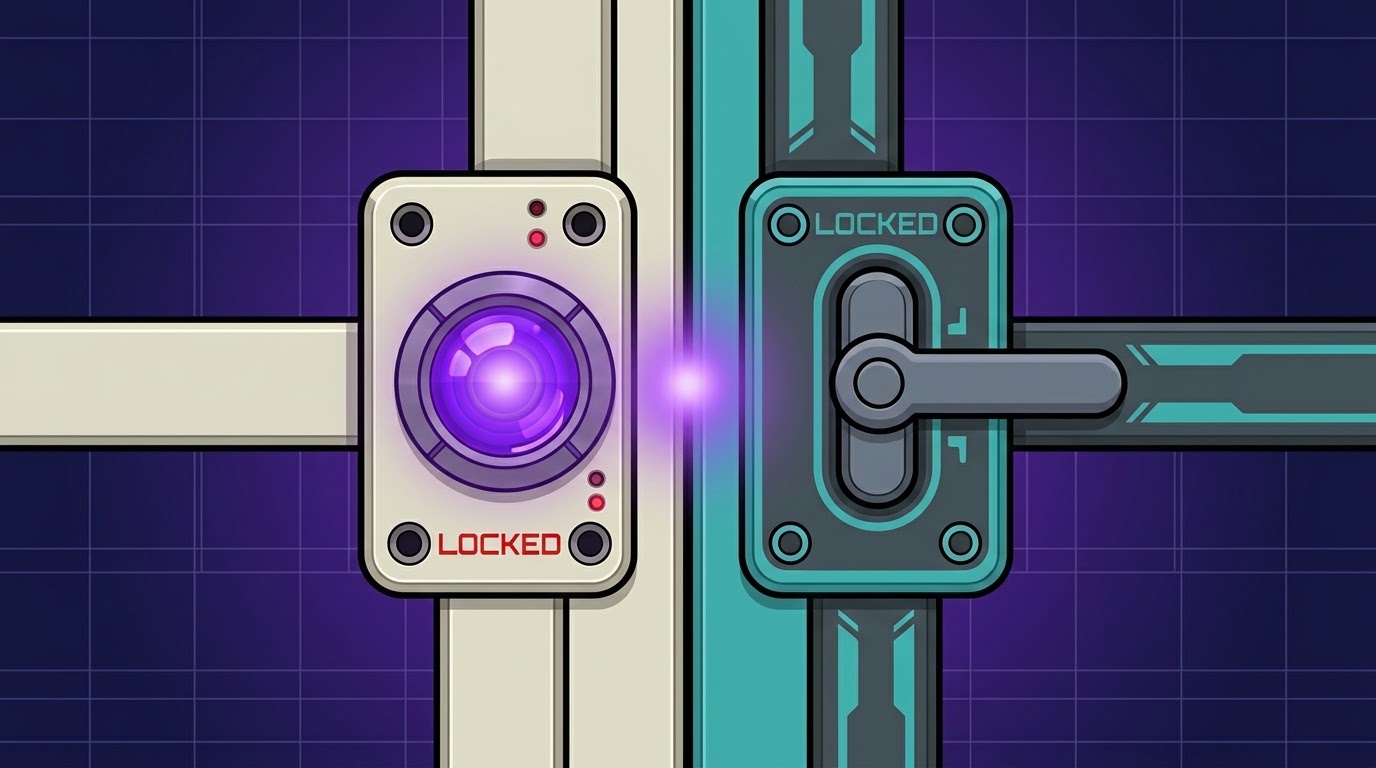
Why industrial AI must understand the entire production line, not just one PLC.
Production lines are rarely single-vendor. A stopped machine on an Allen-Bradley PLC can be waiting on a permissive that only makes sense once you look at the Siemens PLC next to it. What mixed-vendor line context means, why it is different from simply supporting multiple PLC vendors, and how AI can trace a fault across both sides of that handshake.
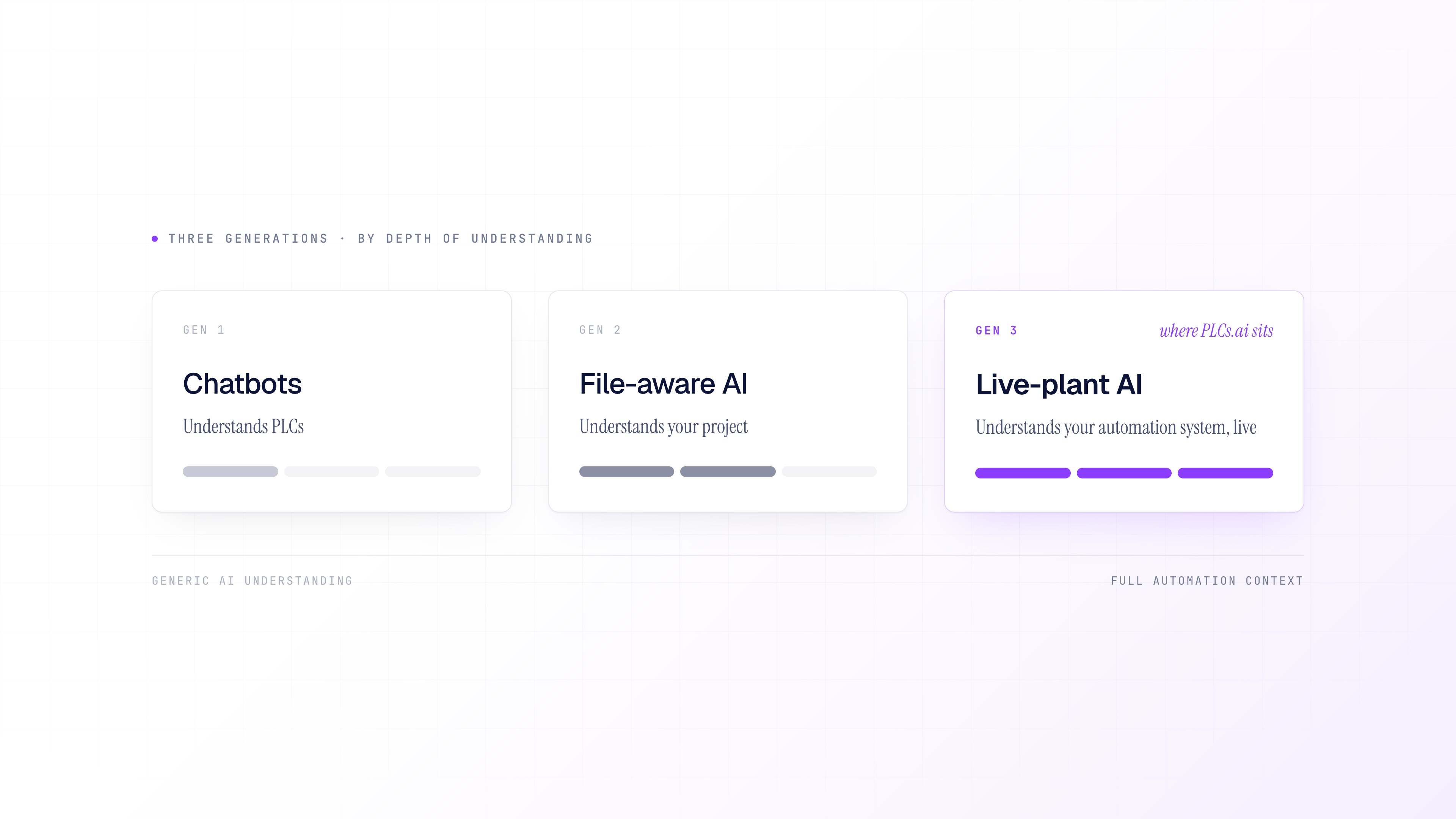
The three generations of AI for PLC work: chatbots, file-aware AI, and live-plant AI.
AI for PLC work splits into three generations: chatbots that understand PLC concepts, file-aware AI that understands your project, and live-plant AI that understands what the automation system is doing right now. Knowing which one you are looking at changes what you can ask it.