
What happens when your best PLC engineer retires?
Every plant has one: the engineer who knows why the timer is set to 1.2 seconds, which interlock you can never bypass, and what actually happened during the 2014 retrofit. When they leave, that knowledge leaves with them. It does not have to.
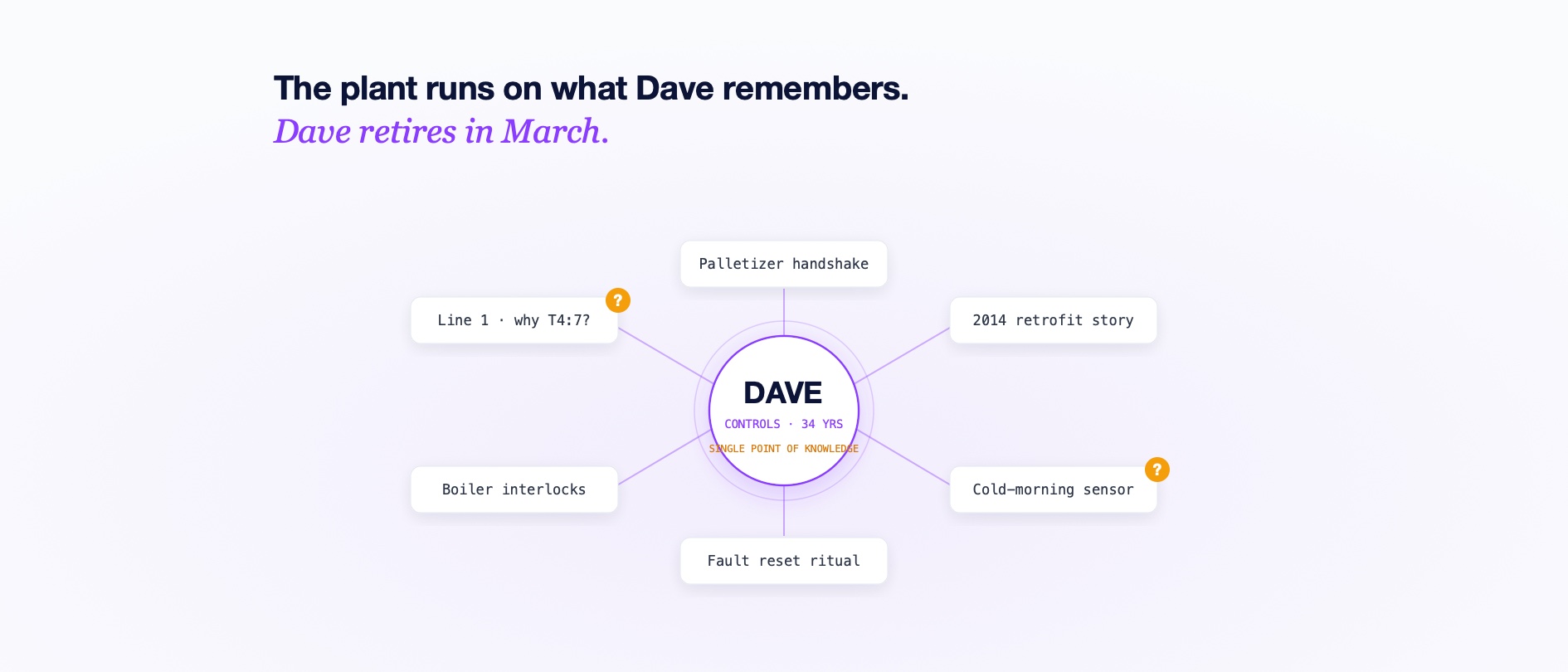
Every plant has one. The engineer who knows why the timer is set to 1.2 seconds, which interlock you can never bypass, why Line 2 needs the workaround after a power cut, and what actually happened during the 2014 retrofit. None of it is written down, because it never had to be: you could always just ask. Then one day there is a retirement cake in the break room, and the plant's operating manual walks out the door with a cardboard box.
The knowledge that leaves with them
It is not the code. The code stays on the controller. What leaves is everything around the code:
- 01The why. Every odd-looking rung has a reason: a fault from years ago, a mechanical quirk, a customer requirement. The rung survives; the reason retires.
- 02The map. Which PLC talks to which, what each station expects from its neighbours, and which handshake breaks first when something drifts.
- 03The workarounds. The unofficial reset sequence, the sensor that reads low on cold mornings, the alarm that is safe to ignore and the one that never is.
- 04The history. What changed in every revision, which contractor touched what, and which "temporary" fix from 2014 became load-bearing.
Why hiring cannot fix it
The instinct is to hire a replacement and schedule some handover weeks. But Deloitte and The Manufacturing Institute have projected millions of manufacturing roles going unfilled in the US alone through the end of the decade, and controls engineers sit at the sharp end of that gap. Even when you do hire well, a handover transfers a fraction of thirty years, and the new engineer spends their first year learning by breaking things during outages, which is the most expensive classroom in industry.
This is not a staffing problem. It is a knowledge accessibility problem. The knowledge exists; it is just locked in one person's head.
What to capture before they go
If your best engineer is within a few years of retiring, the checklist is short and urgent: know which systems only they understand, get the reasoning behind the strange parts of the code recorded while they can still explain it, and make sure the documentation describes the plant as it runs today, not as it was commissioned.
How AI changes knowledge transfer
This problem is why PLCs.ai exists. Upload the projects and the platform reads what the code actually does, so anyone on the team can ask it questions in plain English, the way they used to ask the expert. Documentation regenerates from the running code instead of drifting. Engineers capture notes and decisions as they work, so the why gets recorded in the flow of the job rather than in a farewell-week interview. And every version and insight is kept, so the next person inherits a system with its memory intact.
Your best engineer's judgment cannot be replaced. But the thirty years of answers they carry can be made available to everyone, before the cake in the break room.
How automatic documentation works →See the platform →More from the blog
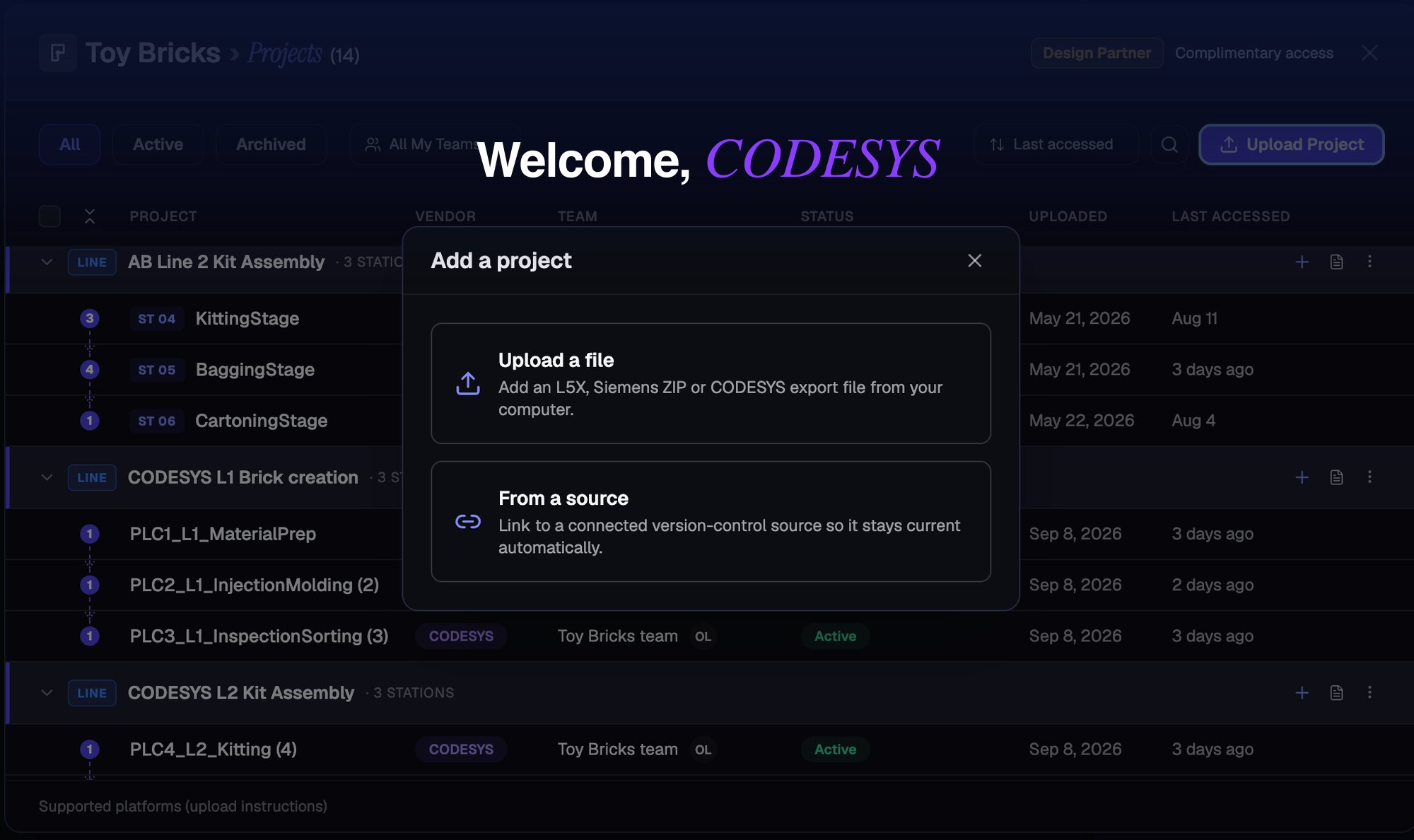
PLCs.ai now supports CODESYS V3 projects, across the entire CODESYS ecosystem.
PLCs.ai now supports CODESYS V3 projects, across first-party CODESYS environments and OEM platforms like WAGO, ABB, and Bosch Rexroth. A CODESYS export has no tag table and no hardware/IO tree, so getting there took real re-engineering, not just a new parser.
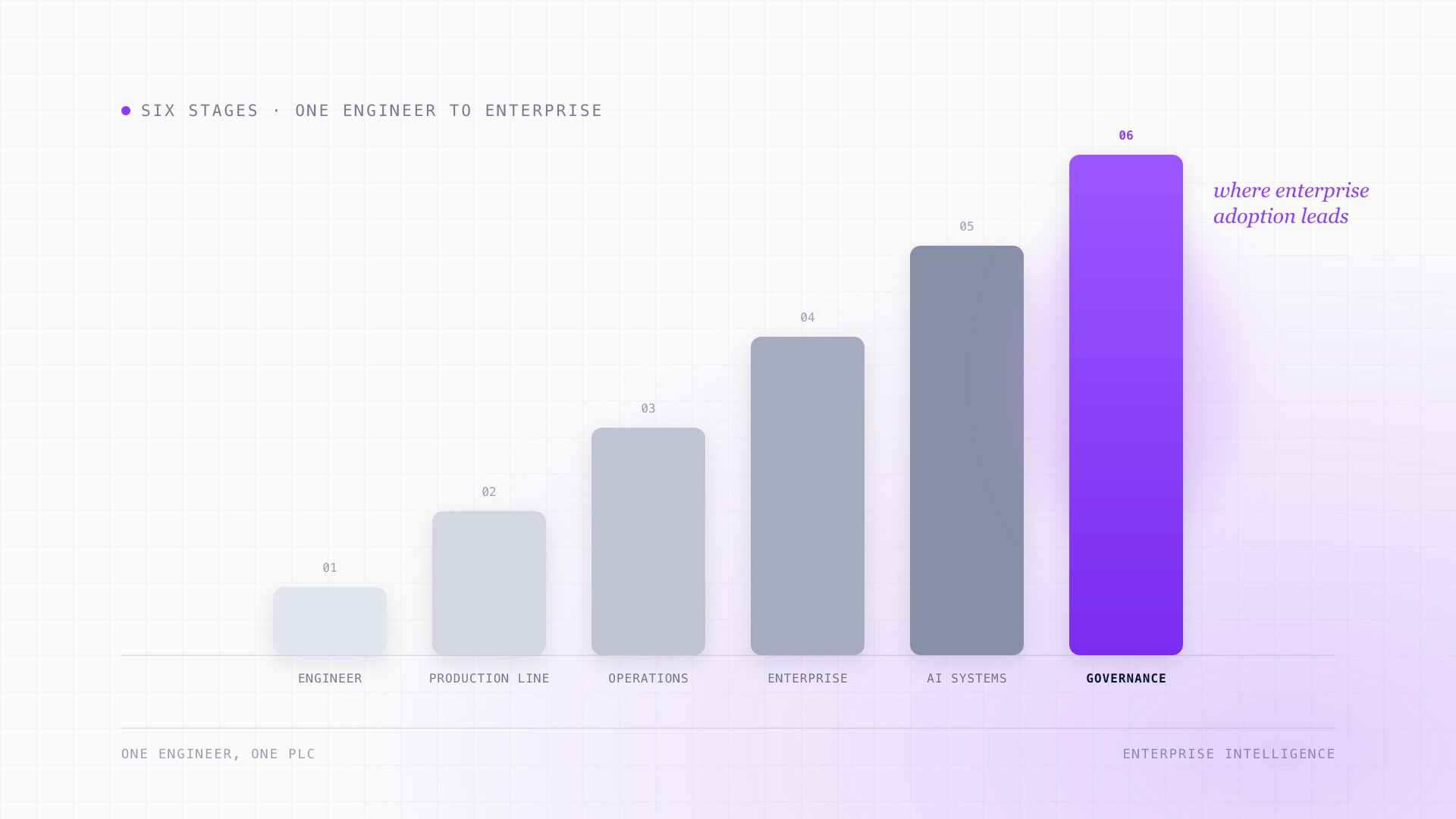
The manufacturing AI adoption journey: from individual tools to enterprise intelligence.
AI adoption in manufacturing almost never starts as a transformation. It starts with one engineer, one PLC, and one AI model. What changes at each stage after that, from helping a maintenance tech at 2 AM to governing access across an entire enterprise, and why the infrastructure needed at the end looks nothing like where most manufacturers start.
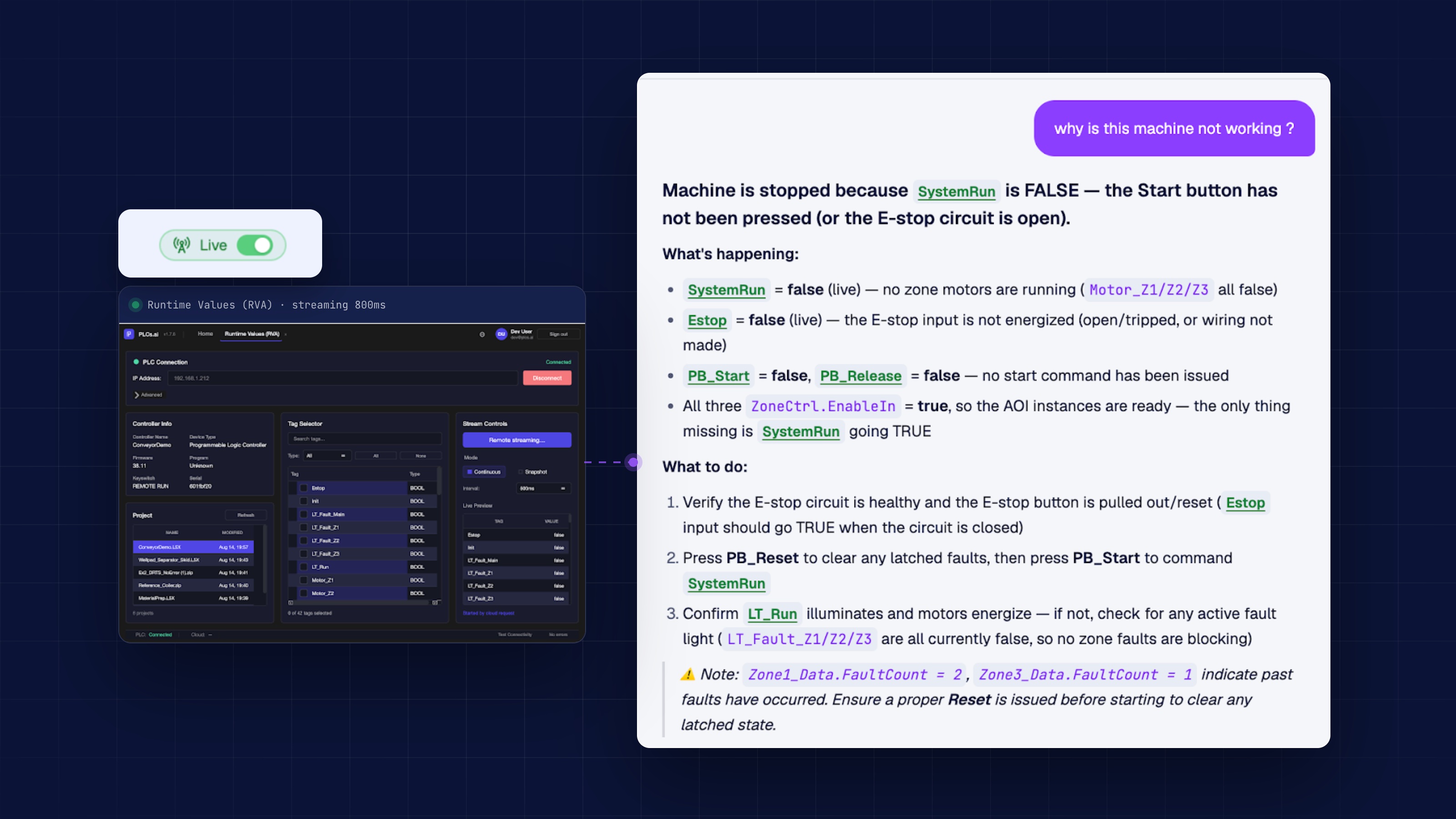
Runtime PLC data doesn’t just help troubleshooting. It multiplies it.
Reading the code tells you what a line is supposed to do. Runtime tag values tell you what it is actually doing right now. Troubleshooting needs both, and the gap between them is where most outages drag on.