
Can you use AI for PLC programming? An honest guide.
Yes. AI can already read, explain, troubleshoot, document, and generate PLC code — and it is already doing so on production lines. What it can do, where it still fails, and what that means for the people who program PLCs for a living.
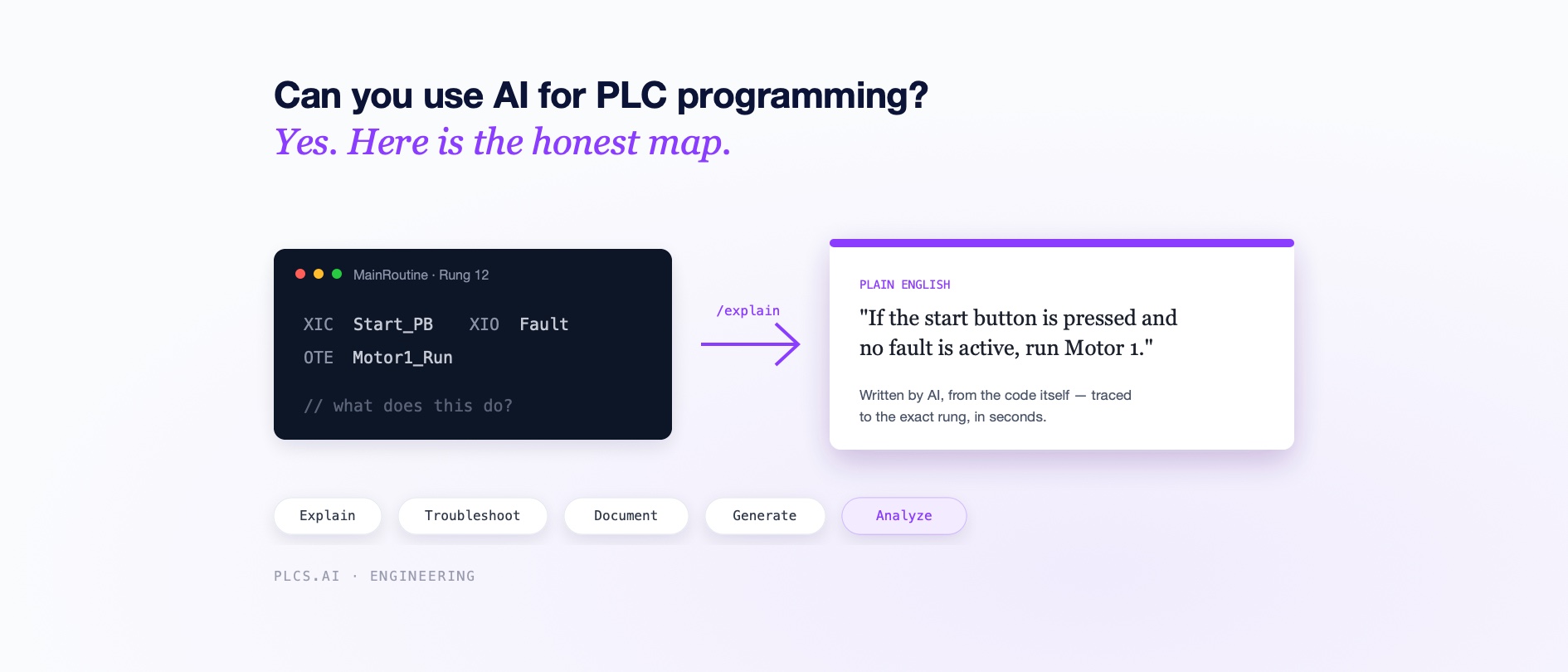
Yes. AI can already read, explain, troubleshoot, document, and generate PLC code, and it is already doing so on real production lines. But "AI for PLC programming" covers everything from pasting a rung into a chatbot to platforms that reason across an entire plant, and the difference between those two ends of the spectrum is the difference between a party trick and a tool you can run a factory with. Here is an honest map of the territory.
What can AI actually do with PLC code today?
- 01Explain. Give it a routine, a rung, or a whole program, and it describes what the logic does in plain English — including code written fifteen years ago by someone who has since retired.
- 02Troubleshoot. Ask why the line stopped, and it traces permissives, interlocks, and handshakes back to the exact logic behind the fault.
- 03Analyze. Purpose-built tools scan whole projects for dead code, race conditions, cycle-time bottlenecks, and missing interlock resets — the bugs that hide for years.
- 04Document. Generate current, plain-language documentation from the code as it actually runs, instead of a commissioning binder that stopped being true a decade ago.
- 05Generate. Turn a plain-language request into ladder logic or structured text — with the important caveat covered below.
Which AI is better for PLC programming: a chatbot or a purpose-built tool?
A general-purpose chatbot like ChatGPT or Claude genuinely understands PLC concepts and explains a pasted fragment well. What it cannot do is see your project: the tag aliases, the UDTs, the call tree, the other controllers on the line, or your plant's standards. It also has no safety workflow — it hands back code with no simulation or review step, and no idea what that code might break three stations downstream.
Purpose-built platforms ingest the native project file — a Studio 5000 L5X export or a TIA Portal project — and reason over all of it at once. The strongest ones go further: they reason across every PLC on a production line, ground their answers in live tag values from the running controller, and review generated code before anything is saved. That gap, context, is the whole game.
The difference between a chatbot and a purpose-built platform is not intelligence. It is context: the project, the line, the history, and the standards the code is held to.
Is AI replacing PLC programmers?
No — and the honest version of this answer matters. What AI replaces is the bottleneck around PLC programmers: the queue of people waiting for the one engineer who understands the system, the hours spent deciphering undocumented logic before real work can start, the documentation nobody had time to write. Engineering judgment — knowing what a safe change looks like, what the mechanical reality of the line is, what the process can tolerate — is not in that list. Plants that adopt AI do not need fewer controls engineers; they get more out of the ones they cannot hire enough of.
Are PLCs becoming obsolete?
No. PLCs remain the most reliable, deterministic, safety-proven way to control physical machinery, and the world's factories run on billions of lines of ladder logic that are not going anywhere. What is changing is the layer above them: AI is making that installed base legible — understandable, documentable, and maintainable by more people than the handful who wrote it. The controller is not obsolete; the idea that only one person in the building can understand it is.
How to start using AI on your own PLC code
- 01Start with a read-only job: export one project (an L5X from Studio 5000, or a TIA Portal project) and ask the AI to explain a routine your team already understands. Judge it against what your best engineer would say.
- 02Then give it the question from your last outage — the real one, with the real fault. That test separates tools that know PLC concepts from tools that know your plant.
- 03For code generation, insist on a review-before-save workflow. Never apply AI-generated logic to a live controller without a simulation and approval step.
- 04Check the data terms before uploading anything: your PLC code is your IP, and it should never train someone else's model.
More from the blog
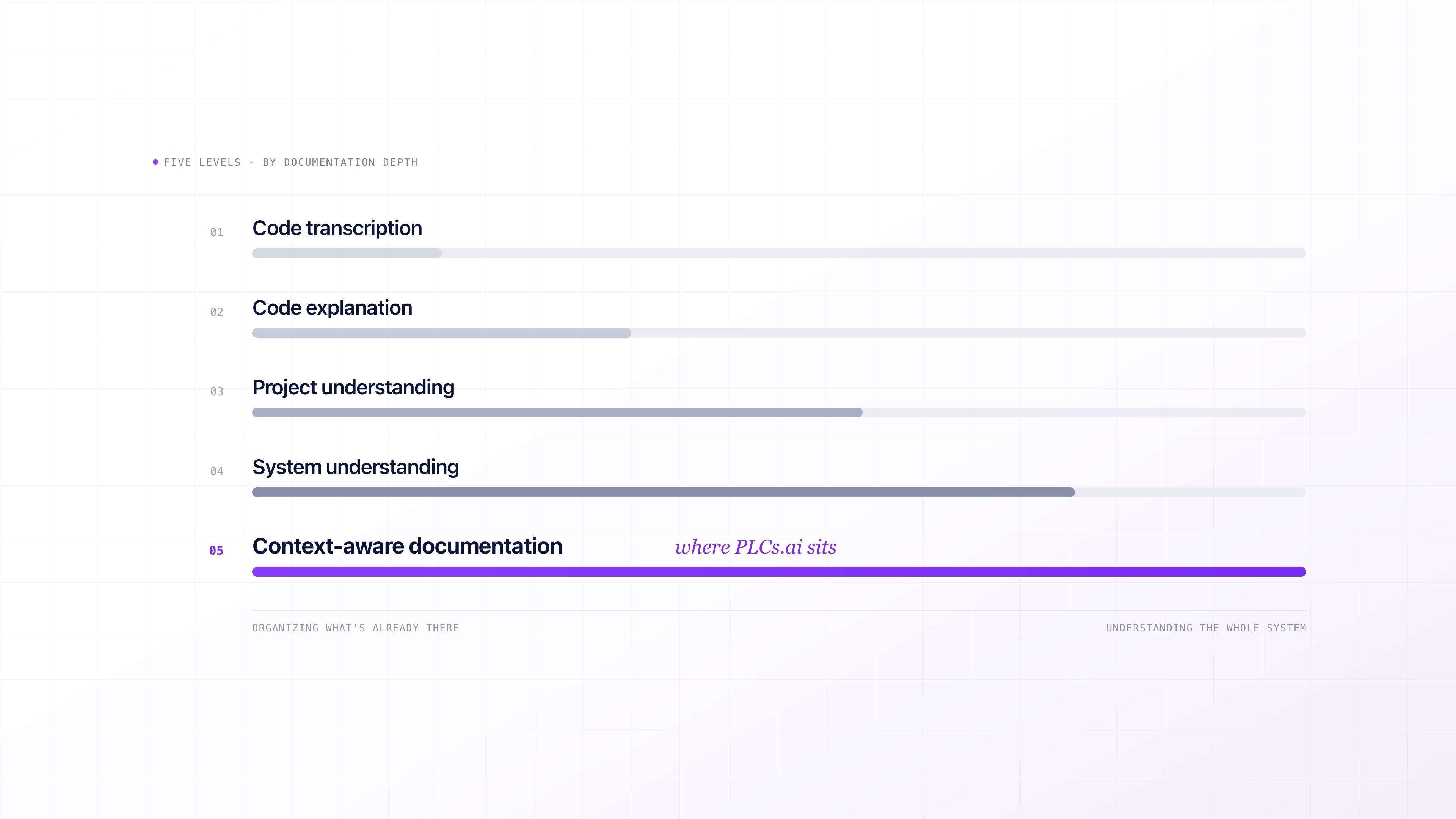
PLC documentation software: 9 tools compared (2026).
Automatic PLC documentation ranges from deterministic tools that reformat what is already in the project, to AI that infers meaning from undocumented code, to platforms that generate documentation from a broader understanding of the automation system. Nine real tools, compared on what they actually do.
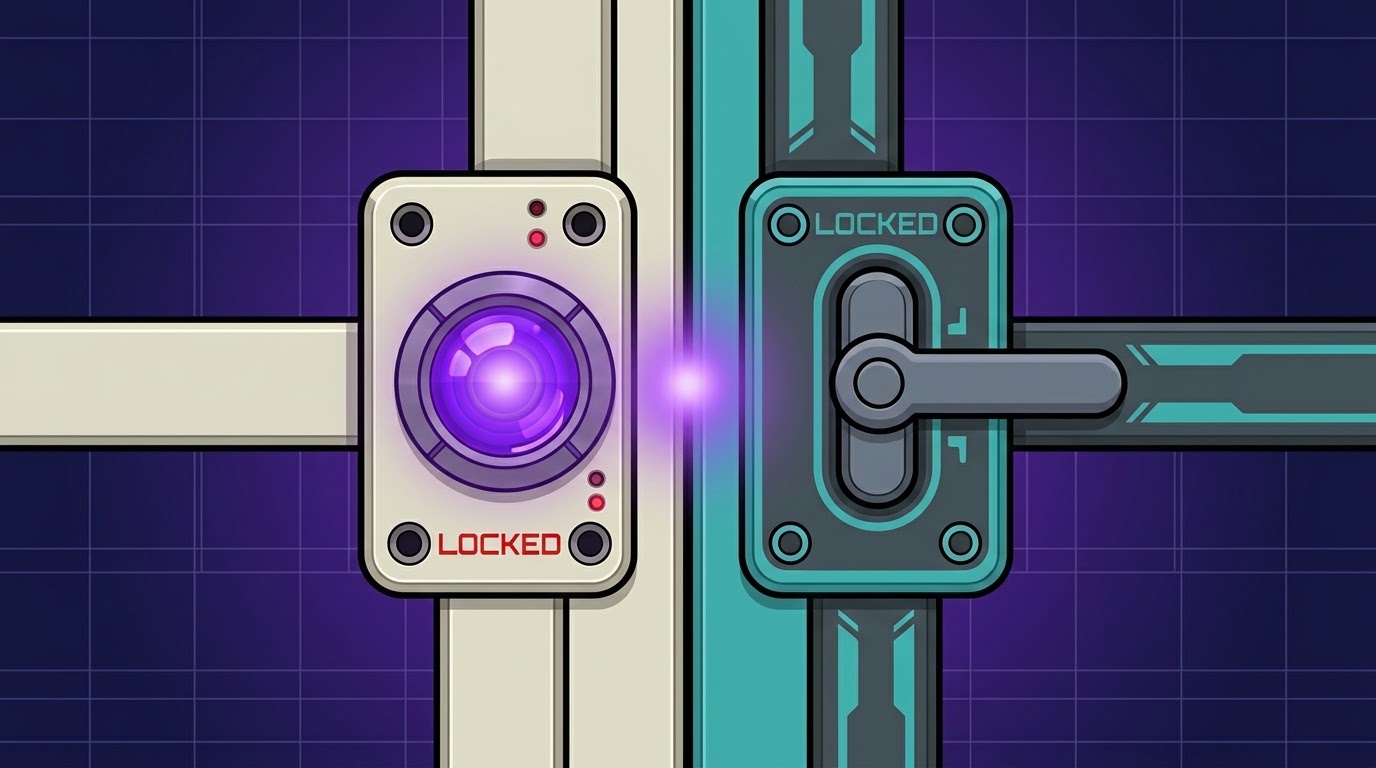
Why industrial AI must understand the entire production line, not just one PLC.
Production lines are rarely single-vendor. A stopped machine on an Allen-Bradley PLC can be waiting on a permissive that only makes sense once you look at the Siemens PLC next to it. What mixed-vendor line context means, why it is different from simply supporting multiple PLC vendors, and how AI can trace a fault across both sides of that handshake.
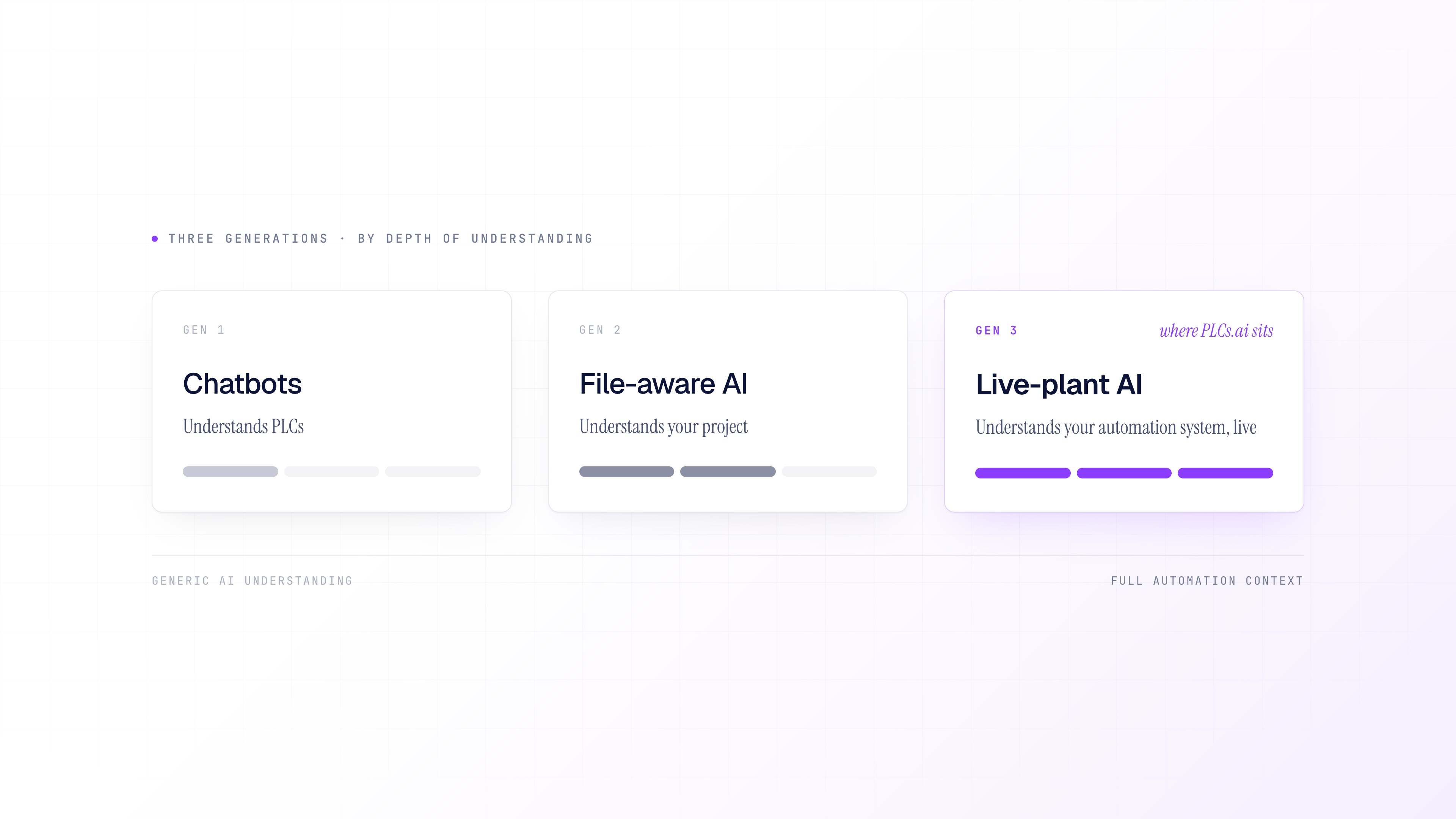
The three generations of AI for PLC work: chatbots, file-aware AI, and live-plant AI.
AI for PLC work splits into three generations: chatbots that understand PLC concepts, file-aware AI that understands your project, and live-plant AI that understands what the automation system is doing right now. Knowing which one you are looking at changes what you can ask it.