
PLCs.ai vs. pasting your PLC files into ChatGPT.
A general-purpose chatbot can read a snippet of ladder logic. It can't reason across your whole project, simulate a change before it goes live, or guarantee your PLC code never trains someone else's model.
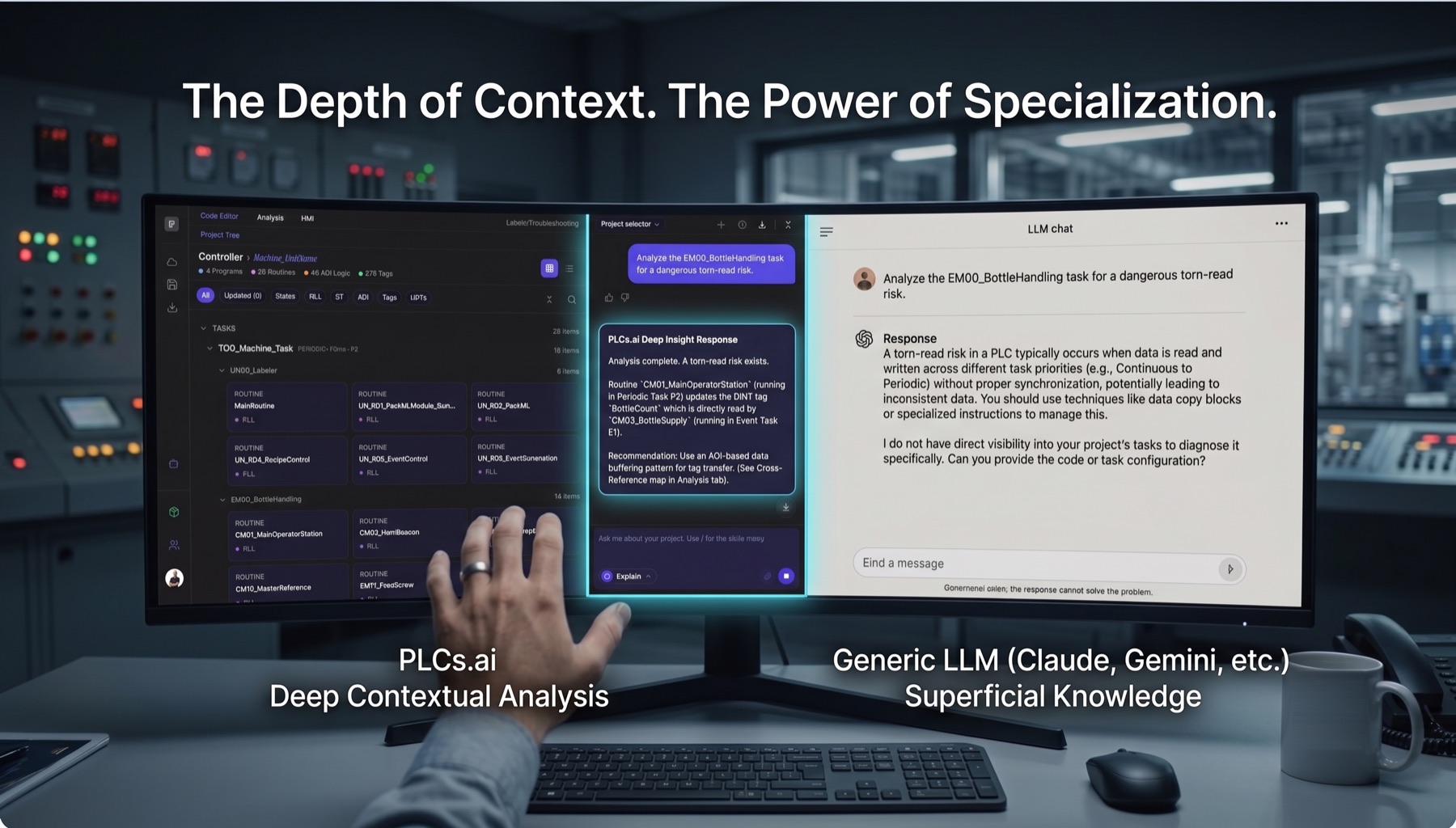
A general-purpose chatbot can read a snippet of ladder logic. It can't reason across your whole project, simulate a change before it goes live, or guarantee your PLC code never trains someone else's model. Here is what breaks down when you paste and hope, and what a purpose-built platform does differently.
Six things that break down when you paste and hope
- 01Project context. A chatbot sees one pasted fragment at a time, with no memory of the rest of your plant. PLCs.ai ingests the full project file and reasons across every routine and tag.
- 02File handling. Pasting a fragment breaks cross-references between UDTs, tag aliases, and call trees. PLCs.ai parses the native Studio 5000 and TIA Portal project structure directly.
- 03Industrial-specific skills. A general-purpose model has no built-in concept of interlocks, handshakes, or cycle time. PLCs.ai ships purpose-built skills like /cycle-time, /interlocks, and /race.
- 04Safety before code changes. A chatbot hands back a code block with no simulation or review step. PLCs.ai runs prompt, simulate, approve, before anything is saved.
- 05Data handling. Pasted content is subject to the general-purpose product's own data and retention terms. PLCs.ai isolates data per customer and never trains on it.
- 06Vendor breadth. A chatbot has no native understanding of Rockwell or Siemens project formats. PLCs.ai supports Studio 5000 and TIA Portal in full production today.
The gap is not about which model is smarter. It is about context, safety, and vendor breadth, the parts of the job a general-purpose chatbot was never built to carry.
We put together the full side-by-side comparison, including the questions we get asked most, on our comparison page.
Read the full comparison →More from the blog
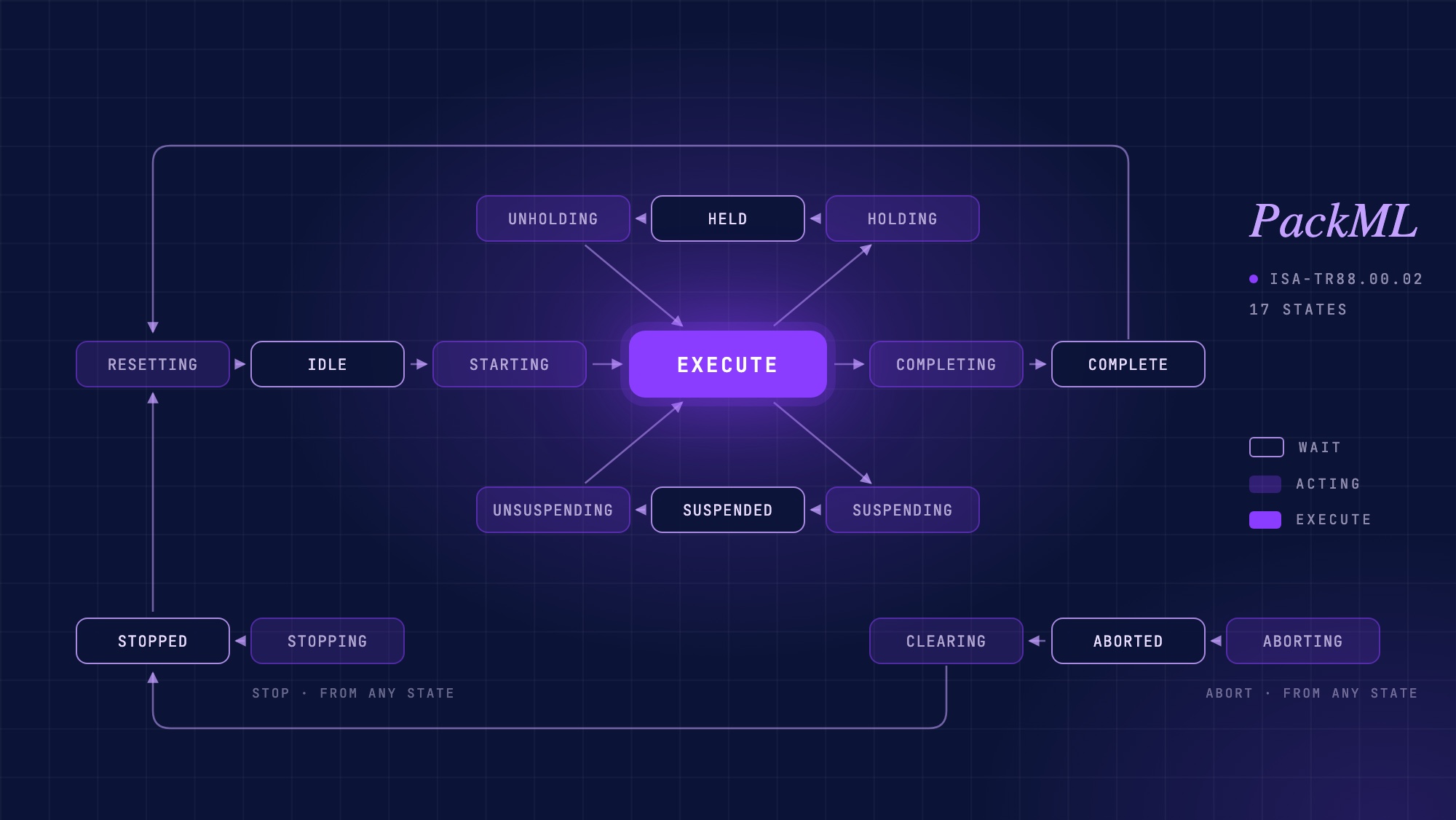
PackML explained: the state model, PackTags, and where AI fits
What PackML is, how the 17-state machine, modes and PackTags work, how to check whether a PLC project really follows it, and where AI helps.
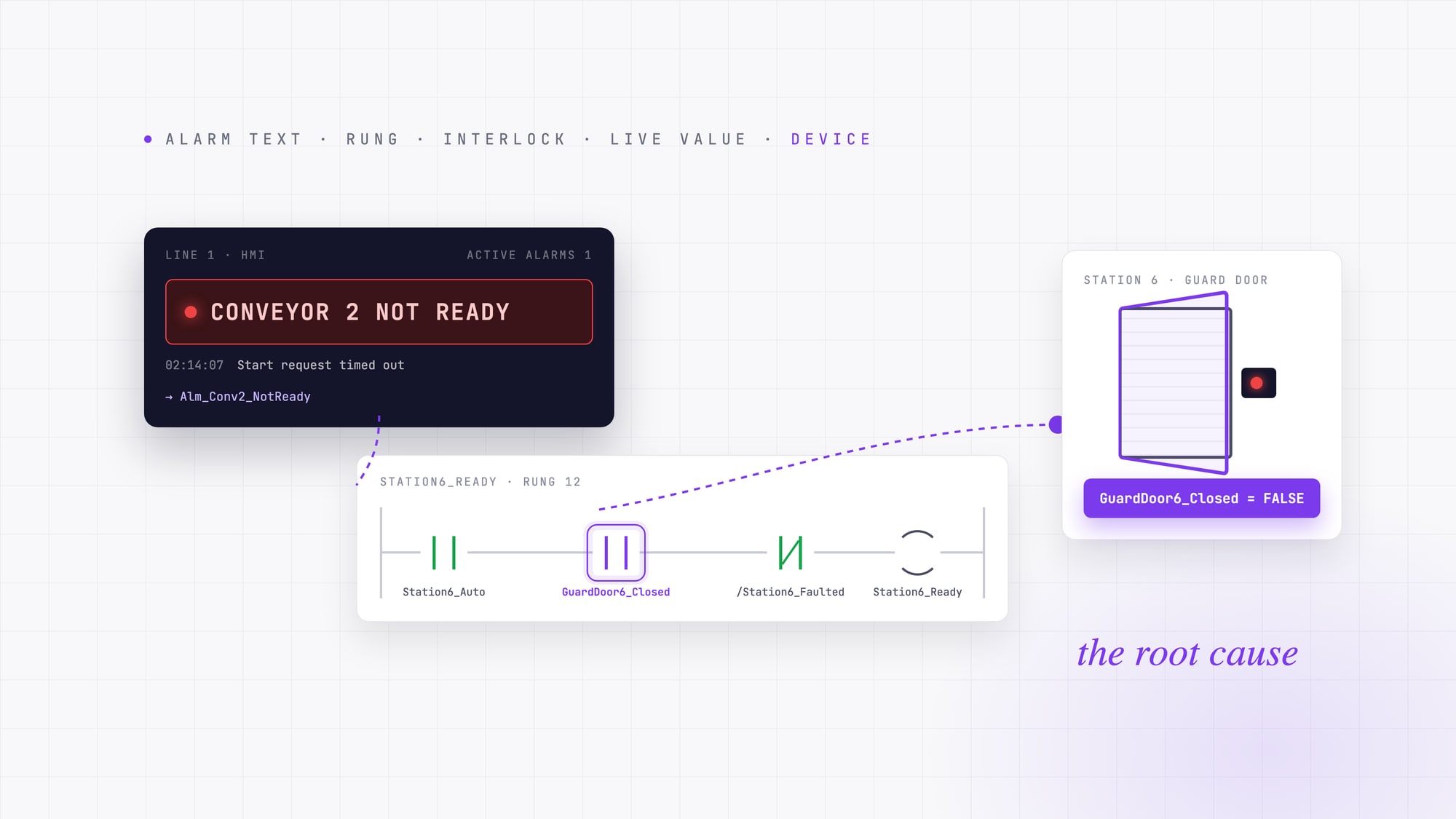
PLC fault codes and HMI alarms: how to trace an alarm back to its root cause
A PLC fault code or HMI alarm tells you where troubleshooting starts, not why the machine stopped. A field method for tracing an alarm from its text to the device behind it.
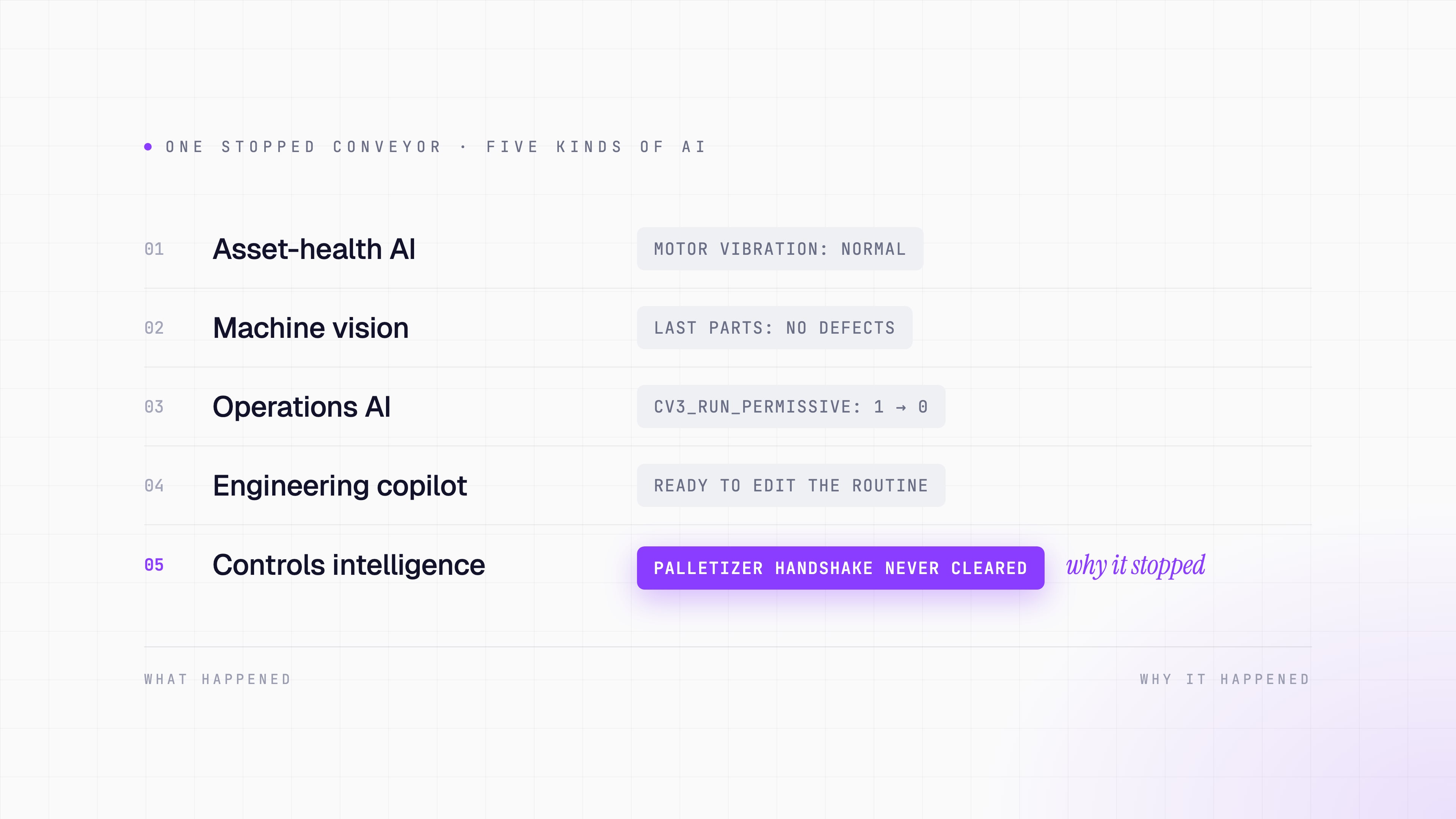
What is the best AI for industrial automation in 2026?
There is no single best AI for industrial automation. Compare industrial AI by the problem it solves, from machine vision to PLC troubleshooting.